


A lot management system exists to answer one kind of question quickly. When a customer calls your plant in Thailand about a defect, how many hours does it take to say which raw material lots went into that product, and how many other products made from the same material have already shipped? Plants that cannot answer on the spot are common in every industry, not just the regulated ones. Because the answer has to be stitched together from paper receiving ledgers, Excel production records and whatever the senior operator remembers, the investigation runs from half a day to several days. Turning that search time into minutes is what the system is for. This article stays deliberately industry-neutral and works through the fundamentals of lot control, how it differs from serial number management, two-way traceability, when to use barcodes and when to use RFID, realistic cost benchmarks and a rollout sequence – all framed around how Japanese-affiliated factories in Thailand and the wider ASEAN region actually operate.
What Lot Management Is – Lot Numbers Versus Serial Numbers
A Lot Is a Quantity Produced Under Identical Conditions
A lot is a group of products or work in progress made continuously from the same raw materials, on the same equipment, under the same conditions. What counts as one group is something each plant decides for itself. No law or standard imposes a universal unit. In practice, the boundaries that get used look like this.
- A production unit such as one charge, one reaction batch or one tank
- A block of time such as one day or one shift
- Everything made until a given incoming material lot is fully consumed
- A boundary drawn at every mould change or equipment changeover
Lot management means giving each of those groups a unique identifier – a lot number – and keeping a record of when it was made, on which equipment, from which raw materials, in what quantity, and where it was shipped, in a form you can retrieve on demand. The point worth holding onto is that the purpose is not the record itself. The purpose is being able to narrow the affected scope quickly and precisely when something goes wrong. If the records exist but the search takes half a day, that is not management.
How Lot Number Management Differs from a Serial Number Management System
The concept most often confused with lot control is serial number management, sometimes called unit-level or item-level tracking. Both attach an identifier and follow its history, but the unit of numbering and the workload on the shop floor are completely different.
| Aspect | Lot number management | Serial number management |
|---|---|---|
| Unit of numbering | A group made under identical conditions | One individual product |
| Identifiers issued per day | A handful to a few dozen | The same count as production volume |
| Primary purpose | Narrowing affected scope, linking to raw materials | Per-unit history lookup, warranty and repair support |
| Suits which products | Liquids, powders, moulded parts, commodity components and other continuous production | High-value items, products where regulation or the customer demands unit identification |
| Operational load on the floor | Relatively low | High. Every unit must be scanned and stored |
| Recall scope when a defect appears | Broader, because the unit is the lot | Can be narrowed to the individual unit |
As the table shows, serial number management buys precision at the price of scanning every single unit, which drives cost and labour sharply upward. Lot management is lighter to operate, but when a problem appears the recall net is cast at lot granularity. Neither is superior in the abstract. The choice falls out of unit price, recall cost, and the precision your customers or regulators demand. The criteria for deciding whether to go all the way down to the individual unit are worked through in more detail in our guide to unit-level traceability management.
Many plants run both. Finished goods carry a serial number, and the raw material lots consumed by that finished unit are linked through lot numbers – a two-storey design. When you build this way, the lot management system has to be able to resolve a serial number to its lot numbers and back again.
What People Mean by Lot Trace
Lot trace refers to the act of following history using a lot number as the starting point. Traceability describes a property, the state of being traceable. Lot trace describes the operation, the act of actually tracing. Holding that distinction in mind makes the rest of the subject much easier to organise.
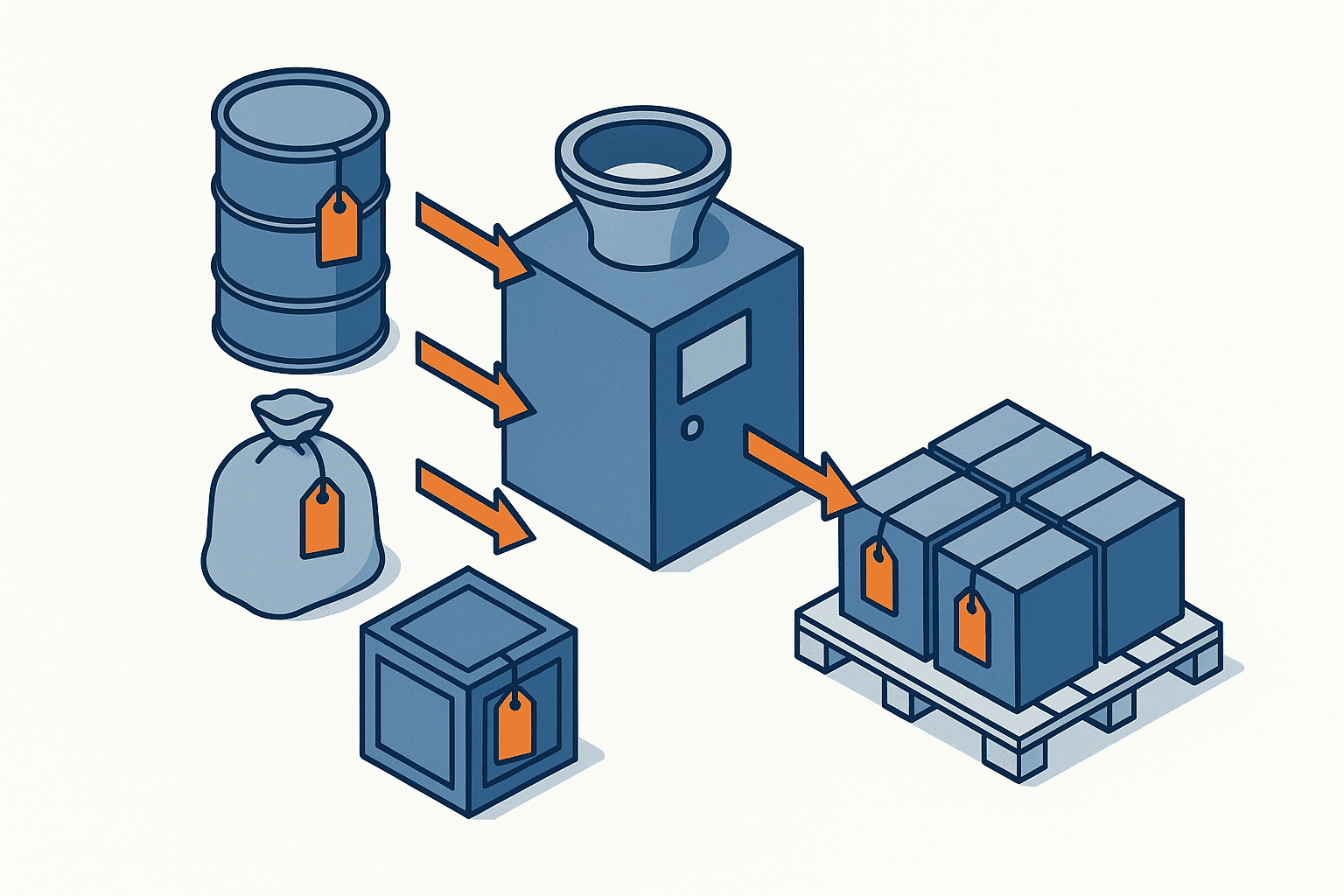
For lot trace to work at all, at least these three records have to be linked to each other.
- Receiving records. Every incoming raw material has been assigned your own receiving lot number
- Consumption records. Which receiving lot was issued into which production lot, and in what quantity
- Shipping records. Which production lot went to which customer, when, and in what quantity
Break any one of the three and the chain fails. The most common break by far is a plant where receiving and shipping are both recorded, but the answer to what was issued into production lives only on a whiteboard or in an operator’s memory. It is barely an exaggeration to say that most of the value of a lot management system lies in capturing that consumption record reliably.
Why a Lot Management System Now Matters in Every Industry
The Structural Pressures on Thailand and ASEAN Sites
Japanese manufacturers in Thailand are facing two trends at once – rising labour cost and real difficulty securing local staff who can be trusted with quality management. When those two overlap, the old arrangement where an experienced veteran ran lot control out of a ledger and their own memory stops being viable. The moment that person transfers or resigns, nobody can reconstruct which raw material went into which lot.
At the same time, quality requirements from Japanese headquarters and from customers keep getting more concrete. What used to be asked as a yes or no question – do you have a traceability process – is increasingly asked as a stopwatch question. For a specific lot, how many hours does it take you to trace back to the raw material supplier? The bar has moved from whether a mechanism exists to how fast it responds.
Three Signs That Excel and Paper Ledgers Have Run Out of Road
You can judge whether your current approach is near its limit with three checks.
- Investigation time is unpredictable. When a customer raises a lot enquiry, you cannot estimate in advance how many hours the answer will take. Depending on who does the digging, the elapsed time varies by a factor of two or more
- The same data is transcribed two or three times. Paper records from the floor are retyped into Excel in the office, then copied again into a monthly summary. Every transcription is another opening for error
- Physical stock and the ledger disagree on lots. The lot actually sitting on the rack does not match the lot in the system, so first-in first-out cannot be enforced
If even one of these applies, improving the Excel file will not fix it. Excel is an excellent container for records, but it has no mechanism for capturing what happens on the floor at the moment it happens. The essential value of a lot management system is not its reporting. It is the input mechanism that captures data at the point and moment of occurrence.
Why the Need Cuts Across Industries
Lot management is often filed away as a food and pharmaceutical topic. In reality the need is rising across every sector, for a simple reason. Defects that originate in raw materials happen in every industry.
- In plastics moulding, moisture content in one particular resin lot causes moulding defects
- In metalworking, hardness variation in one material lot affects tool life and finished dimensions
- In electronics assembly, one solder paste lot or one component reel becomes the root cause
- In chemicals, feedstock purity or by-products shift the properties of the final product
In every one of these cases, if you cannot identify which products received the suspect material lot, you are forced into the most expensive decision available – stopping everything that might be affected. Industry-specific regulatory requirements certainly exist, but the skeleton of lot management is the same regardless of sector. For a sense of how far to build it out in heavily regulated environments, our articles on chemical lot management and on choosing a production management system for food factories are useful companions.
Three Results You Can Expect from a Lot Management System
Result 1 – Stronger Traceability and Shorter Investigations
The largest single effect is being able to pinpoint the affected scope the moment a defect appears. If receiving, consumption and shipping are each captured with a handheld terminal or barcode scan, one query on a lot number puts the whole picture on screen – which production lots that material entered, and which customers received them.
The benefit does not stop at faster searching. An investigation that finishes in minutes also means you no longer have to cast the recall net wider than necessary. A plant that cannot trace has to halt everything made in the suspect window. A plant that can trace halts only the lots that actually match. That gap translates directly into scrapped value and into how much your customer is affected.
Result 2 – Fewer Human Errors from Manual Work
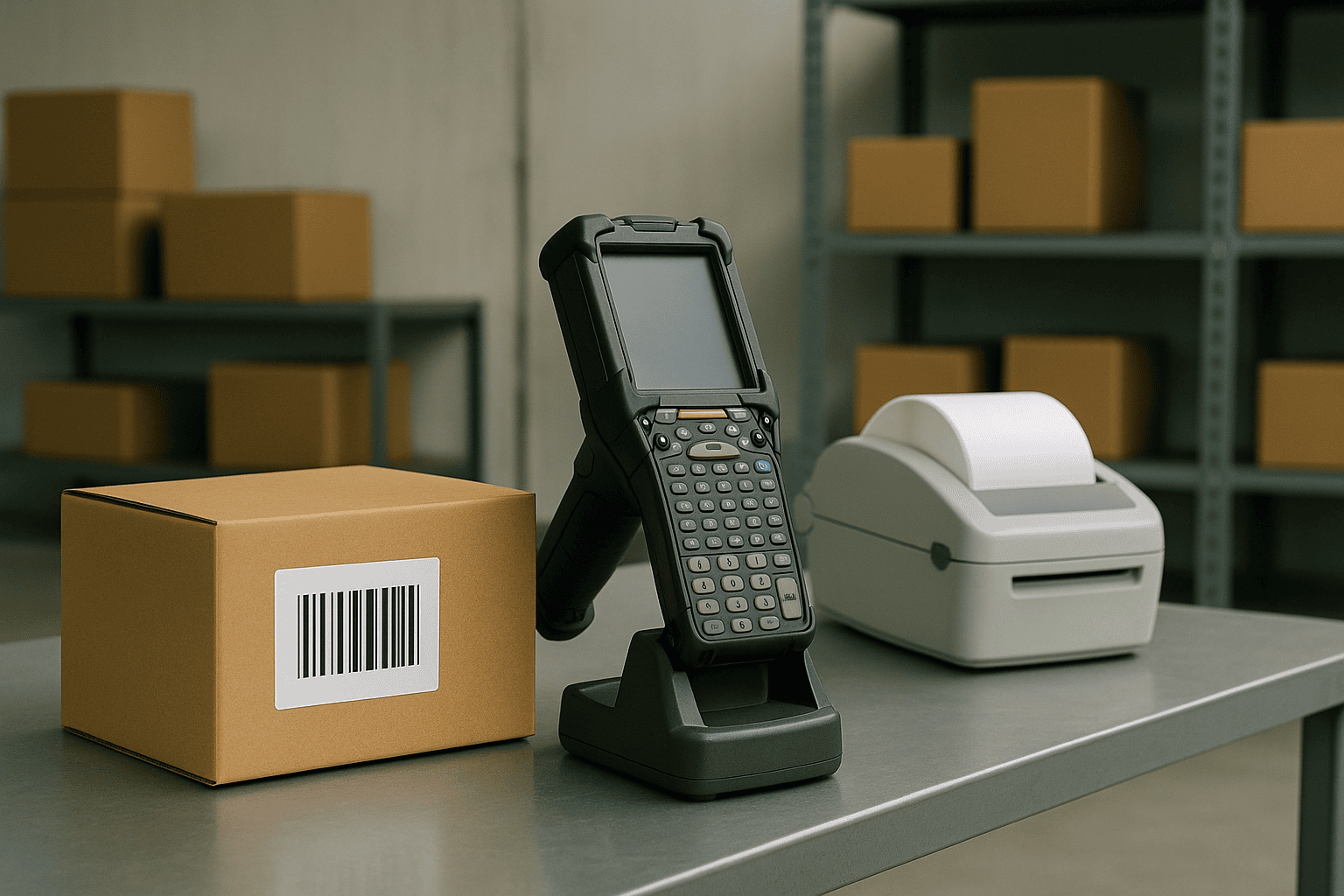
Paper and Excel operation makes mis-written lot numbers, missed entries and transposed digits unavoidable. In Thai plants the risk runs higher than usual, because operators who do not read Japanese are hand-copying identifiers that mix Japanese characters, Latin letters and digits.
Switching to scan-based input reduces this class of error structurally. On top of that, if the system enforces a constraint that only this item and only this lot may be issued at this process step, an incorrect material triggers a warning at the instant it is scanned. Rather than discovering the error later by reconciling ledgers, you stop it as it happens. That is the most practical benefit produced by combining digital records with point-of-work input.
Result 3 – Scrap, Excess Inventory and Stockouts Suppressed Together
When lot information matches physical stock, first-in first-out driven by expiry date or production date can actually be enforced, and scrap from expired material falls. At the same time, because quantities and locations become accurate, you suppress both excess inventory – reordering because something that should exist cannot be found – and stockouts, where material you believed was available turns out to be unusable and the line stops.
These look like three separate problems, but they share one root cause. The true state of inventory is not accurately known. So when you build the business case for a lot management system, do not book scrap reduction as the only benefit. Break it into several cost lines and stack them up, as in the table below. That is much closer to how the savings actually appear.
| Type of effect | What changes | Metric to track |
|---|---|---|
| Reduced investigation labour | Lot enquiries move from hours to minutes | Annual enquiry count and average handling time per enquiry |
| Narrower recall scope | Defect containment tightens to the lot | Quantity and value scrapped in past defect responses |
| Fewer transcription errors | Rework and re-investigation from mis-entry decline | Record corrections per month |
| Less scrap | Fewer write-offs from expiry and degradation | Monthly trend in expiry-related scrap value |
| Healthier inventory | Excess stock and stockouts fall together | Inventory value and downtime caused by stockouts |
| Smoother audits | Preparation labour for customer and certification audits drops | Preparation hours per audit |
Measure the current value of every one of these metrics before you start. If you try to talk about results afterwards without a baseline, you will have no way to justify the investment internally.
Two-Way Traceability – Forward and Backward Tracing
Forward Tracing Answers Where This Lot Went
Forward traceability starts from a raw material lot or a production lot and follows it downstream to see how far it travelled. This is the trace you run when a supplier calls to say a problem has been found in a material lot delivered last month.
You need answers to a specific sequence of questions. Which production lots did that material lot go into? Where were those production lots shipped, when, and in what quantity? Which of it is still sitting in your own warehouse? The speed and accuracy of forward tracing directly determine how quickly you can decide on a recall or a shipping hold.
Backward Tracing Answers What Went Into This Product
Backward traceability runs the other way. It starts from a problem product found in the market or at a customer site and works upstream to what went into it. When a defective unit is returned, you use its lot number to identify the raw material lots consumed, the equipment that produced it, the production date and time, and the process conditions in force.
When backward tracing works, you can separate a cause inside your own process from a cause in a specific supplier lot. A plant that cannot make that separation ends up inspecting every process step with no idea where the fault lies, and the cost of the response climbs steeply.
Only Both Directions Together Are Usable
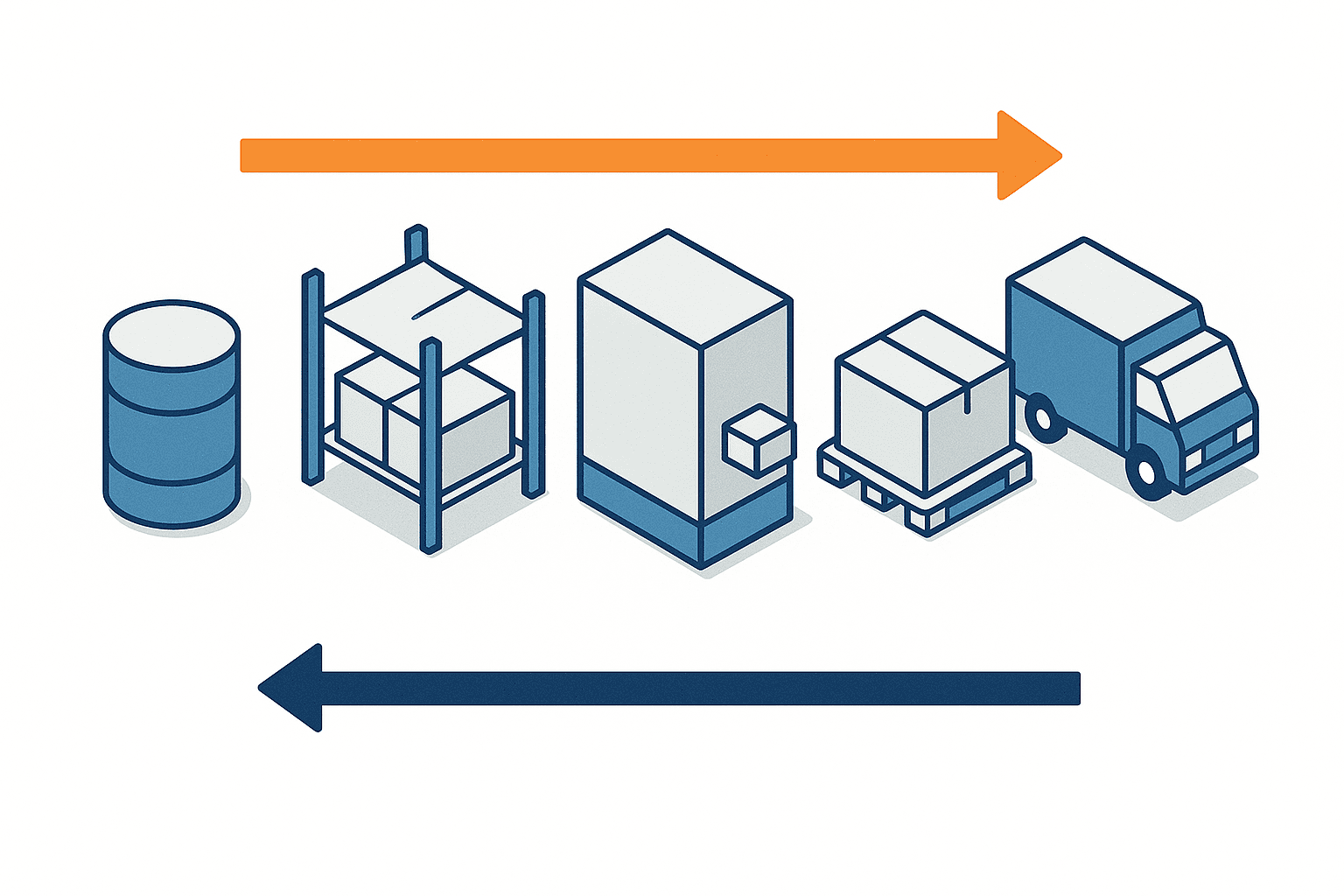
The important insight is that these are not two separate features. They are the same records traversed in opposite directions. If you have recorded the consumption relationship between receiving lots and production lots, and the shipping relationship between production lots and customers, you can walk the chain either way.
In practice, though, plants very often have only one direction working. The classic pattern is shipping records living in the sales management system while consumption records live on paper on the floor, with no lot number joining them. In that state forward tracing may work, but backward tracing breaks partway through.
So when you evaluate systems, do not ask whether there is a traceability feature. Ask how many operations it takes to follow both the forward and the backward direction from a single screen, and have them show you in the demo. Handing over a real lot number and watching the vendor trace both directions live is the most reliable check available. How the build cost changes as you widen the scope of tracing is broken down process by process in our article on traceability system build cost and roadmap.
Barcode or RFID – Why Hybrid Operation Is the Realistic Answer
Why Barcodes Are Still the Mainstream Choice
Barcodes remain the mainstream way to read lot numbers, for three reasons. First, label printing is extremely cheap, and reprinting or relabelling is trivial. Second, the range of reader hardware is wide, so a replacement for a failed unit can be sourced locally. Third, operators already know how to use them, which keeps training cost low.
In Thai plants the third point carries particular weight. In an environment with a steady rate of staff turnover, whether a newly hired operator can become competent in a short time is what decides whether the mechanism sticks.
RFID Pays Off in a Narrow Set of Processes
RFID has clear advantages. It reads many tags at once and can read tags that are not in line of sight. But tags cost more per unit than barcode labels, and reads become unstable near metal and liquids. Deploy RFID across every process and the cost balloons while most of those processes gain nothing a barcode would not have given them.
The standard practice, therefore, is to restrict RFID to processes with high read frequency or genuine batch-read value.
| Process | Recommended read method | Reason |
|---|---|---|
| Raw material receiving inspection | RFID where deliveries arrive in bulk | Multiple cartons on a pallet can be read in one pass |
| Storage and put-away | Barcode | Low frequency, and one-by-one confirmation is sufficient |
| Issue to production | Barcode | Each item must be verified individually and reliably |
| Handover between processes | RFID where frequency is high | Recorded simply by passing through, without stopping work |
| Shipping inspection | RFID where shipment units are large | Full verification before loading finishes in a fraction of the time |
| Stocktaking | RFID where volumes are large | Quantities are captured just by walking past the rack |
The decision rule is simple. The more reads per day a process involves, the easier the RFID investment is to recover.
The Design Condition That Makes Hybrid Operation Work
If you run barcodes and RFID side by side, there is one thing the system side has to get right. Whatever the read method, the identifier in play must belong to a single unified lot numbering scheme. If RFID tag IDs and barcode numbers form two separate schemes, every cross-process trace has to pass through a conversion table, and that table becomes a permanent source of failures.
Concretely, either write your own lot number onto the RFID tag, or fix the tag-ID-to-lot-number link at the moment of issue. Decide this at the outset. If you do not, adding an RFID process later forces a rebuild of the whole design.
How to Choose the Right Lot Management System
What to Look for by Industry
The skeleton is industry-neutral, but where you place the emphasis shifts by sector.
- Process manufacturing such as food, chemicals, cosmetics and coatings. Choose a product that handles recipe and formulation control, best-before and use-by date control, and strict batch-level traceability. Also check yield handling, by-product handling, and unit conversion between weight and volume
- Assembly and fabrication such as automotive parts, electronics and machinery. The focus moves to bill of materials integration, coexistence with serial numbers, and how intermediate work in progress lots are treated. If a customer requires unit-level identification, you need the two-storey design
- Materials processing in metals and plastics. Linking mill certificates and other material certificates to lot numbers matters, as does sub-lot numbering when cutting or splitting turns one lot into several
- Contract manufacturing. Because required record fields and formats differ by customer, check whether you can add and change record fields yourself
Package Software or Custom Development
The split comes down to whether your management units are standard. If your lot boundaries, numbering scheme and record fields fit the ordinary shape of your industry, package software wins. Implementation is shorter, cost is predictable, and other companies’ operational knowledge is already baked into the product.
On the other hand, plants where lots branch through splitting or repacking, or where several receiving lots are blended into one production lot, sometimes fall outside standard package functionality. Even then, consider the middle path first – let the package cover what standard functionality can handle and build the remainder as add-ons. Choosing full custom development from the outset inflates both cost and schedule, and leaves you poorly placed to absorb specification changes.
Here are the practical items to confirm during selection.
- Can your existing lot numbers be registered exactly as they are, in the same length and character set, so that you migrate without changing the scheme?
- Can one production lot be linked to multiple receiving lots, and can the system handle blending of several lots?
- Are parent-child lot relationships preserved through splitting and repacking?
- Can the display switch between Thai, Japanese and English, and can shop floor screens run in Thai?
- Can the system operate offline, buffering on the handheld when the network drops?
- Can you add record fields yourself, without a vendor charge each time?
Integration with an Existing Production Management System or MES
Where a production management or accounting system is already running, a decision appears. Do you bring lot management in as a separate system, or extend what you already have?
As a rule, it is safest to keep inventory quantities in exactly one system. If both the lot management system and the existing production management system hold quantities, they will diverge somewhere, and you end up with a process where a human decides which one is right. If you integrate, make one side the master for inventory and keep the other strictly read-only.
If an MES evaluation is running in parallel, the efficient move is to fold your lot management requirements into the MES evaluation criteria. We set out how to build those criteria in our piece on the four evaluation criteria for comparing MES platforms.
Cost Benchmarks and How to Build the Payback Case
What the Numbers Look Like
For production management systems aimed at small and midsize manufacturers with roughly 10 to 100 employees, published benchmarks put initial cost on a scale that follows plant size. Sites with 10 to 30 employees land at roughly JPY 1 million to 3 million, sites with 30 to 50 employees at JPY 2 million to 5 million, and sites with 50 to 100 employees at around JPY 4 million to 10 million. Delivery model shifts the figures too. The same source splits cloud deployments at JPY 300,000 to 1 million upfront plus a monthly subscription, against on-premise perpetual licences at JPY 2 million to 8 million upfront plus annual maintenance. Lot management is sometimes delivered as one function of such a production management system and sometimes as a standalone product, so the total moves substantially with how you draw the scope.
The point worth carrying forward is that a phased approach – starting with a small tool and expanding toward the full production management scope – can reportedly begin in the JPY 1 million to 2 million range. Trying to cover every plant and every line at once sends the number sharply upward, but restricting the first phase to one line or one product family, connecting receiving through consumption to shipping there, and then widening sideways is entirely workable.
Compare Quotations in Four Layers
Comparing vendor quotations on the bottom line alone leads to bad decisions. Break every quotation into the four layers below, confirm what each vendor has included in each layer, and only then compare.
| Cost layer | What it contains | Easy to overlook |
|---|---|---|
| Software layer | Licence fees, annual maintenance | How charges escalate with user or device counts |
| Hardware layer | Handheld terminals, label printers, wireless LAN | Wireless survey and installation work is often quoted separately |
| Implementation layer | Initial setup, master data registration, legacy data migration | Some quotes assume you clean up the item master yourself |
| Adoption support layer | Floor training, operating rules, post-launch hand-holding | Producing training material in Thai is frequently excluded |
Of these four, the one most consistently underestimated in real projects is the fourth, adoption support. A running system produces no records if the floor does not scan.
How to Frame the Payback
As a rule of thumb for payback, one published estimate suggests that a plant with about 30 employees implementing a system in the JPY 5 million range recovers the investment in roughly one to two years. Change the assumed scale and the payback period changes with it, so translate that figure to your own size rather than adopting it directly. Where lot management is the objective, build the payback out of these components.
- Labour saved on enquiry handling and record searching. Multiply current annual handling hours by your loaded labour rate
- Value of avoided over-recall and over-scrap. From past defect responses, estimate the portion of scrapped quantity that would not have been stopped had tracing existed
- Scrap avoided from expiry and degradation. Calculate from the last 12 months of actual write-offs
- Stocktaking labour saved. Base it on total hours consumed by the two annual counts
One caution. Do not let the bulk of the payback rest on the value of avoiding a large recall. Putting a low-probability event at the centre of the justification guarantees that management sends the case back. Build the structure of the payback out of investigation labour and scrap that occur routinely, and attach recall avoidance as a supplementary benefit.
How to Run a Lot Management System Rollout
Stage 1 – Take Stock of the Current State
The first task is not selecting a system. It is taking an inventory of your existing records. Write these three things down on paper.
- At which process step, by whom, what is recorded, and on which medium – paper, Excel or verbal handover
- How that record reaches the next process or the office, and how many transcriptions occur along the way
- When a lot enquiry arrives, which records you consult and in what order
Doing this almost always surfaces the same structure – records are being kept, but the records are not connected to each other. Identifying exactly where the connections are missing is the starting point of requirements definition.
Stage 2 – Define Requirements and Fix the Scope
Using the inventory, decide what you will do and how far you will go. The critical discipline here is not being greedy with the first scope. Aim for complete traceability across every process on the first attempt and several months disappear into master data cleanup while the floor’s enthusiasm cools.
A realistic first scope has three elements – lot assignment at receiving, the consumption record at issue to production, and the lot record at shipping. Connect those three and the skeleton of two-way traceability exists. Push detailed intra-process records and automatic data collection from equipment into phase two.
Stage 3 – Prove It on the Floor with a PoC
Before signing the main contract, run a period where the system actually operates, limited to one product line or one warehouse. What you are checking is not whether features exist. It is whether the system survives contact with the shop floor.
- Can the handheld be operated while wearing gloves? Are the on-screen characters readable under the plant’s lighting?
- How many seconds does one read take? Does it break the rhythm of the work?
- Where does the network drop? Does the signal reach the back of the warehouse and the gaps between metal racking?
- Which processes make labels dirty or abraded? Is the label material rated for that environment?
- When someone scans the wrong thing, can the floor reverse it without calling for help?
Most of what a PoC uncovers is about physical environment and usability, not functionality. Flushing those out at this stage is what prevents the post-launch outcome nobody wants – a system that goes unused.
Stage 4 – Full Rollout and Horizontal Expansion
Move into the full rollout on the basis of what the PoC confirmed. The key point here is to document the operating rules and distribute them on the floor in Thai. Who scans and when, what to do when someone notices a missed scan, and who approves exceptions. A system whose answers to those three questions are not written down falls apart the moment the responsible person changes.
Start horizontal expansion only after the first line has been stable for three months. Expanding to several lines simultaneously makes it impossible to isolate the cause when something goes wrong.
Frequently Asked Questions
What is lot management?
It is the practice of assigning a unique number to a group of products made from the same raw materials, on the same equipment, under the same conditions, and keeping the production and inventory movement history of that group in a traceable state. The purpose is not the record itself but being able to narrow the affected scope quickly and precisely when a problem occurs.
What is the difference between a lot number and a serial number?
A lot number is assigned to a production group, while a serial number is assigned to each individual product. Serial numbers deliver higher tracing precision, but they require every unit to be scanned, which raises both workload and cost. Consider a serial number management system when unit prices are high or when a customer or regulation demands unit-level identification. In most other cases lot number management is sufficient.
How much does a lot management system cost?
For production management systems aimed at small and midsize manufacturers, published initial-cost benchmarks run to roughly JPY 1 million to 3 million for sites with 10 to 30 employees, JPY 2 million to 5 million for 30 to 50 employees, and JPY 4 million to 10 million for 50 to 100 employees. A phased implementation narrowed to a single line can reportedly start in the JPY 1 million to 2 million range. On payback, one estimate suggests roughly one to two years for a plant with about 30 employees implementing a system in the JPY 5 million range. Note that handheld terminals, label printers and wireless LAN infrastructure are additional costs.
Can lot trace be achieved in Excel?
Using Excel as a container for records is certainly possible, but in practice you hit two walls. The first is that Excel cannot reliably capture what happens on the floor at the moment it happens, so delayed and incorrect transcription is unavoidable. The second is that two-way tracing across multiple files is slow, and enquiry response time varies enormously depending on who is doing the work. If lot counts are low and there is only one process step, Excel can carry you. In a plant with multiple processes where blending and splitting occur, the limit arrives early.
If we already have a production management system, do we need a separate lot management system?
First test the lot functionality you already have. Take a real lot number and see how many operations it takes to trace both directions from a single screen. If tracing works, what is usually missing is not a system but a means of capturing data on the floor, and adding handheld scanning resolves it. Only when tracing itself is impossible, or when the system cannot represent blending of multiple receiving lots, does it make sense to consider an additional system or an extension.
Summary
Whether a lot management system delivers results depends far less on which product you choose than on whether receiving, consumption and shipping records form a single unbroken chain. If records exist but searching takes half a day, or if the consumption record alone remains on paper at the line, no amount of functionality will let you answer the enquiry.
The order of decisions is this. Take stock of your records process by process and locate the breaks in the chain. Set a first scope limited to receiving, consumption and shipping. Make barcodes the default read method and layer RFID only onto receiving, shipping and stocktaking, where batch reading genuinely pays. That hybrid configuration is the most cost-effective shape available in practice. Compare costs by breaking quotations into software, hardware, implementation and adoption support. Build the payback out of the investigation labour and scrap you incur routinely.
At sites in Thailand and across ASEAN, rising labour cost and the difficulty of securing quality management talent are advancing together, and operations that depend on one veteran’s experience are becoming impossible to sustain. A lot management system is a realistic way to move that experience out of a person and into a mechanism. Industry-specific requirements are real, but the skeleton is common to every sector, and every plant can assemble it in the same order.
TOMAS TECH supports Japanese-affiliated manufacturers in Thailand and across ASEAN in building lot management and traceability, combining the PEGASUS production management system with barcode and RFID shop floor data collection. We are equally happy to talk at the early stage, before any product shortlist exists, when the goal is simply to map where the breaks in your records are. Starting from a conversation about the current situation on your floor is perfectly fine, so please get in touch through our contact page.
References
- What Lot Management Is and How It Relates to Traceability – An introductory explanation of the relationship between lot management and traceability, the units to which lot numbers are assigned, and the benefits an implementation delivers.
- Lot Management Fundamentals and Where the Efficiency Gains Come From – Covers the basic thinking behind lot management and what to focus on when streamlining record-keeping work on the shop floor.
- Lot Management Explained – From Definition Through System Implementation – A step-by-step article running from the definition of lot management to how to approach a system implementation.
- From Lot Management Basics to Putting a System to Work – Covers foundational lot management knowledge and concrete ways to strengthen traceability using a system.
- Lot Tracking and Traceability Guide for Process Manufacturers – A lot tracking guide for process manufacturing. Explains the concept of two-way traceability through forward and backward tracing, and the reasoning behind hybrid operation combining barcodes and RFID.
- Cost Benchmarks for Production Management Systems at Small and Midsize Manufacturers – Cost benchmarks for production management systems aimed at small and midsize manufacturers with 10 to 100 employees. Presents initial costs by plant size of JPY 1 million to 3 million for 10 to 30 employees, JPY 2 million to 5 million for 30 to 50 employees and JPY 4 million to 10 million for 50 to 100 employees, cost bands by delivery model such as cloud and on-premise, the observation that a phased implementation can begin in the JPY 1 million to 2 million range, and an estimate that a plant with about 30 employees implementing a system in the JPY 5 million range recovers the investment in roughly one to two years.


