


Should you invest in Thailand, or shift to Vietnam? For ASEAN FA investment in 2026, framing the question as that binary choice is the fastest way to reach the wrong answer. Thailand opened applications for an incentive package aimed specifically at automation investment early in 2026, while Vietnam steered toward technology-intensive investment through Resolution 10. The two countries are not fighting over the same investment. The roles they play have begun to diverge. This article compares the FA investment environment in both countries based on information available as of August 2026, and lays out a framework for how to allocate investment across sites.
Thailand’s FA incentives in 2026 — inside the BOI “Smart and Sustainable Industry” scheme
The change with the most practical impact in Thailand this year is that the BOI (Thailand Board of Investment) began accepting applications for a measure called “Smart and Sustainable Industry” in early 2026. It is designed as a time-limited scheme running from 2026 through 2027, and it provides a corporate income tax exemption when an existing manufacturing site invests in areas such as automation, robotics, digital technology, energy efficiency, or renewable energy.
Until now, BOI privileges carried a strong association with new market entry and greenfield plant construction. For Japanese-owned plants that have been operating in Thailand for ten or twenty years, the natural reaction was that these schemes simply did not apply to them. What makes this measure practically important is that the incentive attaches not to building something new, but to upgrading what you already have.
The basic shape — three years of tax exemption, capped at 50%
The structure is simple. Qualifying investment earns a three-year corporate income tax exemption. There is a ceiling on the amount exempted, however, and that ceiling is normally 50% of the qualifying investment amount.
The point worth flagging is that “no corporate income tax for three years” is not an accurate reading. What is exempted is capped at an amount calculated against the qualifying investment, and once that allowance is used up, corporate income tax becomes payable even within the three-year window. Conversely, a site with modest taxable income may reach the end of the period without ever exhausting the allowance. In other words, the real value of this privilege is determined not only by the investment amount but by how much taxable income that site is projected to generate over the next three years.
If you write your capital request by automatically treating the benefit as 50% of the investment amount and calculating payback from there, you risk overstating the actual effect. It is worth reconciling the three-year taxable income forecast with your finance team early in the process.
The 100% cap applies only when 30% or more comes from Thai-made machinery
The figure most often misunderstood in this scheme is the 100% exemption cap. The 100% cap genuinely exists, but it is not granted unconditionally. It applies only where 30% or more of the value of the automation and robotics machinery is linked to, or backed by, machinery manufactured in Thailand.
So the design is not “invest in automation in Thailand and get a 100% exemption.” It is “structure the automation investment so that it uses Thailand’s domestic machinery industry, and a 100% cap becomes possible.” This condition is not something you satisfy at the tax filing stage. It is settled when you decide where the machinery comes from, which means at the RFP and competitive quotation stage. That is the practical fork in the road.
Japanese production engineering departments typically put Japanese and European equipment at the top of the list based on track record and ease of maintenance, and in recent years Chinese options have grown as well. Continue procurement along that path and the order gets confirmed with the Thai-made machinery ratio short of 30%, at which point the 100% cap is no longer reachable retroactively.
Looked at the other way, there is a great deal that can be manufactured in Thailand outside the robot itself — conveyors, frames and stands, jigs, safety fencing, and control panels. If you approach the design of your procurement by separating core equipment from peripheral equipment, rather than buying the entire line as a single package from overseas, the 30% threshold moves into realistic range.
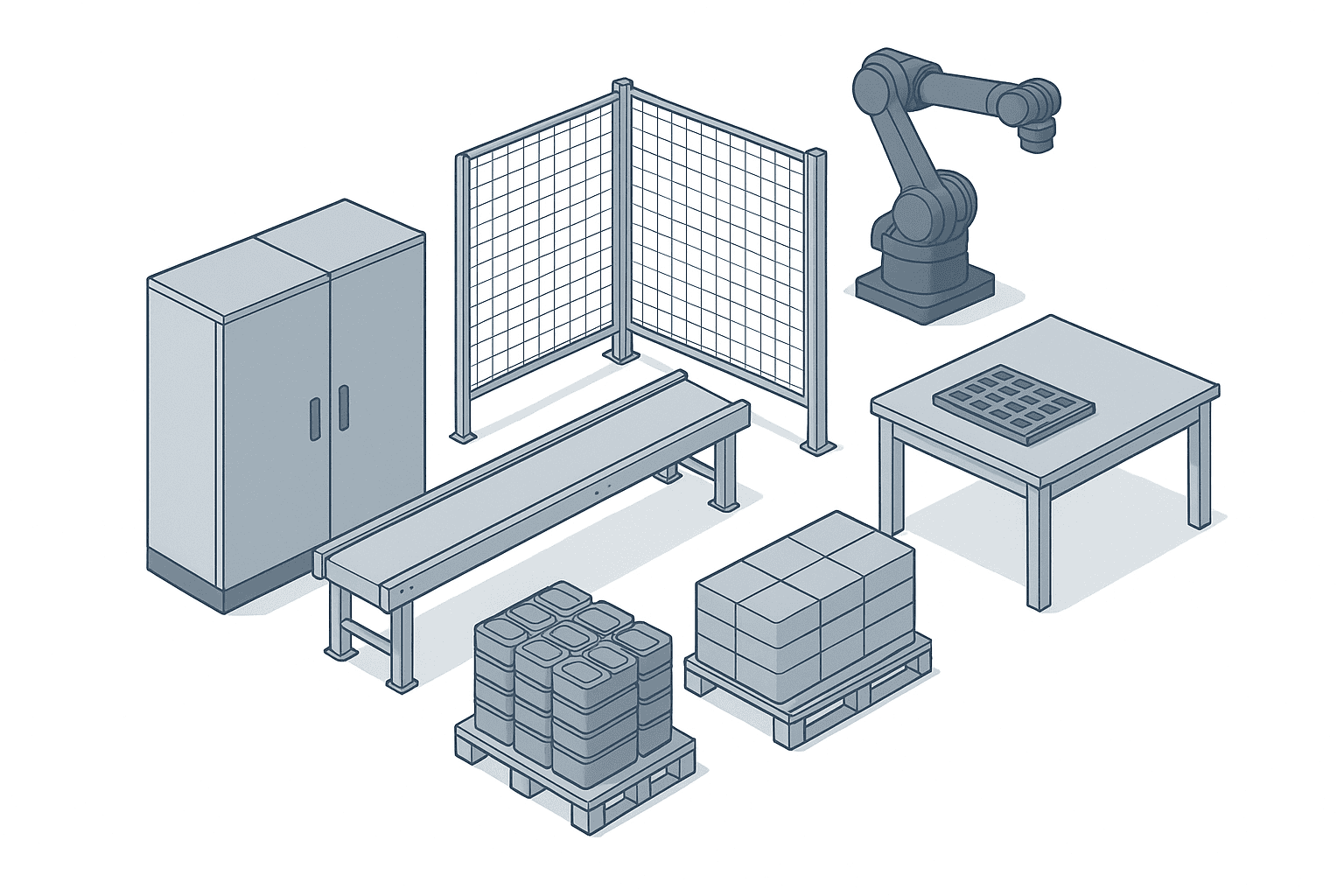
That said, the specific method for judging whether “30% or more of the value is linked to or backed by domestically manufactured machinery” leaves room for differing interpretations depending on how a project is structured. On how to split the amounts and what documentation to keep, the safe approach is to confirm the specifics with the BOI or a local specialist before placing the order. For the structure of the BOI automation privilege itself, our article on the BOI automation corporate tax exemption for 2026 works through the requirements that separate 50% from 100% in detail.
The THB 1,000,000 minimum investment hurdle
To qualify, the eligible capital investment must be at least THB 1,000,000. Land costs and working capital are not included in that figure.
One million Thai baht is a threshold that a single robot cell, or the addition of an inspection unit to an existing line, comfortably clears. On the other hand, the small labor-saving investments that come out of shop-floor improvement activity — a few hundred thousand baht for a jig modification, or a simple automatic feeder — will not reach the threshold on their own.
This is where the way you build the investment plan starts to matter. Labor-saving investments that would otherwise be ordered piecemeal across the fiscal year can, when redesigned as a single investment plan grouped by theme, add up to a scale that clears the bar. How far multiple projects can be bundled into one qualifying investment is a matter of how the scheme is administered, so confirming this at the planning stage is a prerequisite.
“Using the equipment” and “building the equipment” are two different schemes
There is another point that gets conflated. The BOI has a separate and considerably more generous category, A1, for companies that manufacture robotics and automation equipment itself. The A1 category provides an eight-year corporate income tax exemption with no cap. Separately, the Smart and Sustainable Industry measure may also allow an import duty exemption on the qualifying machinery.
A privilege for the user side capped at 50% or 100% over three years, and a privilege for the builder side with no cap over eight years, are fundamentally different instruments. If those two get mixed up and the message that circulates internally becomes “apparently Thailand’s automation incentive is an eight-year exemption,” the premise of the capital request collapses.
The two target completely different parties. A manufacturer installing automation equipment in its own plant is on the user side and should be assessing the Smart and Sustainable Industry framework. A business that manufactures and sells robots or automation equipment as a product — an equipment maker or a system integrator setting up manufacturing capability in Thailand, for example — may qualify on the builder side under the A1 category.
This two-tier structure is consistent as policy. A privilege that thickens the domestic manufacturing base for automation equipment (the A1 category) is paired with a privilege that raises the cap on condition that domestically manufactured machinery is used (the 30% Thai-made machinery condition), and together they are designed to pull the FA supply chain toward completion inside Thailand. That direction connects directly to the question of supplier ecosystem depth discussed later.
How to read the application trend in the first half of 2026
The numbers are moving too. Thailand’s inbound direct investment in the first half of 2026 was reported to be up 80% year on year on an application basis. Reports describe the scale in varying terms, so building an argument on any single figure is unwise, but multiple reports agree that a substantial increase has occurred. It is also worth remembering that these are application-based figures, and actual construction and start-up do not necessarily follow at the same pace.
At a finer level of granularity, the BOI’s “Smart and Sustainable Industry” scheme drew 132 applications worth USD 507.6 million, of which machinery, automation, and robotics-related investment accounted for 82 applications worth USD 387.4 million.
What that breakdown reveals is where the center of gravity of the scheme actually sits. By count, 82 of 132 applications — roughly 60% — are machinery, automation, and robotics-related, and by value, USD 387.4 million out of USD 507.6 million, roughly three quarters, falls in that same area. Despite being a broad framework that includes energy efficiency and renewable energy, what is actually being used is centered on automation investment.
Taking just the 82 machinery, automation, and robotics applications gives an average of around USD 4.72 million, but that figure is pulled hard by large projects and cannot be treated as representative of an individual case. You cannot judge whether your own project is reasonable by comparing it against that average. What is usable as decision input is the ratio of counts and the ratio of values above.
Vietnam’s FA investment environment in 2026 — Resolution 10 and a qualitative shift
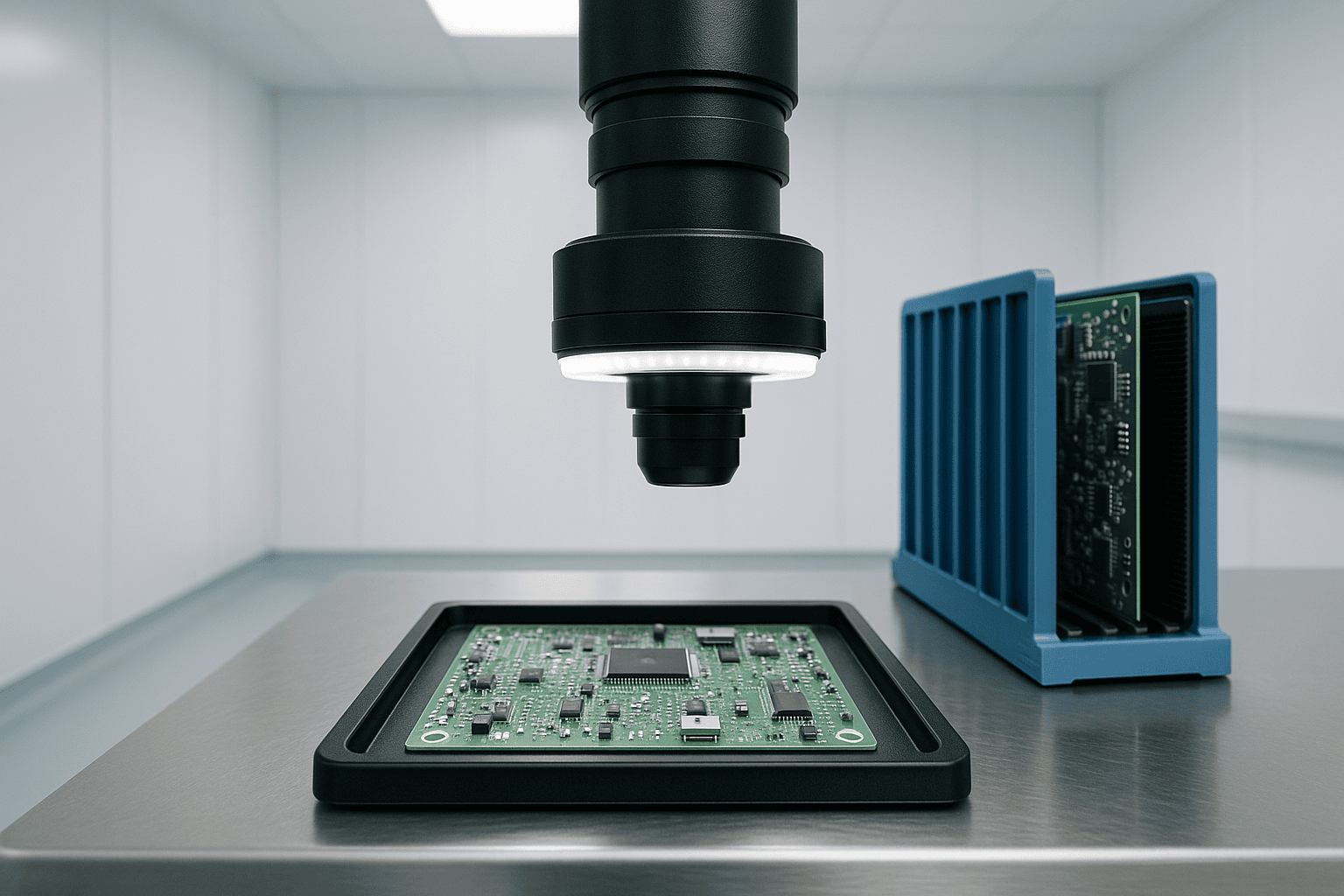
On the Vietnam side, what matters in 2026 is not the amount of investment but the change in what kind of investment is arriving.
FDI of over USD 38 billion on a registered basis from January to July
Vietnam’s FDI from January to July 2026 exceeded USD 38 billion on a registered basis, up 58% year on year. Looking at that growth rate alone, it appears investment is pouring into Vietnam.
The breakdown tells a different story. The growth did not come from a broad increase in the number of projects. It was driven by large, high-value-added projects in areas such as semiconductors, AI, and electronic components. The structure is not “many small factory investments accumulating” but “a small number of enormous projects lifting the overall figure.”
That distinction is decisive for Japanese manufacturers making investment decisions. Reading “FDI is up 58%, so there is a tailwind for setting up plants in Vietnam” misreads the reality. The tailwind is blowing in specific industrial areas, not for new labor-intensive assembly operations.
The priorities set out by Resolution 10
Backing this structure on the policy side is Resolution 10. The resolution designates semiconductors, AI, electronic components, biotechnology, advanced logistics, finance, and innovation-driven manufacturing as priority sectors. Put another way, it makes explicit a policy of favoring technology-intensive investment over labor-intensive assembly work.
The Vietnamese government has further set a target of attracting USD 200 billion to USD 300 billion in FDI over the five years from 2026 to 2030, with 75% of that expected to come from developed countries. You can read in this a transition from a phase of gathering volume to a phase of selecting the quality and origin of investment.
The implication for Japanese manufacturers is clear. A strategy that keeps a Vietnamese site positioned as “the place we put labor-intensive processes because labor is cheap” is drifting out of the policy tailwind. Conversely, advancing automation and labor reduction to raise technology intensity is an investment that points in the same direction as the policy priorities. Whether you can present automation at your Vietnamese site not as a cost-reduction measure but as an investment that protects the site’s position is often what decides whether headquarters is persuaded. Our article on factory automation in Vietnam covers the specific implementation issues there, and the major difference from Thailand is that the source of payback leans toward supporting production increases rather than reducing headcount.
Another effect that is easy to overlook is the knock-on into the labor market. As semiconductor and AI-related clusters expand, what they demand is not operators but engineers. Competition for people in maintenance, electrical control, and production engineering roles intensifies along an axis quite separate from operator wage trends. The situation where you have installed automation equipment but nobody to keep it running is not something you can predict by watching average wage statistics.
Growth in the automation market itself
One study projects Vietnam’s automation market growing at roughly 15.4% CAGR to reach USD 3.12 billion by 2032. Market forecasts of this kind vary in definition and assumptions between research firms, so the numbers themselves should not be the basis of an investment decision. Still, the fact that multiple indicators point in the same direction suggests the layer of suppliers and maintenance talent is likely to thicken over time.
If you are committing to automation at a Vietnamese site today, the practical safeguard is to build a configuration that does not rely on that “will thicken over time” assumption, and that secures spare parts and technicians at the point of installation.
Vietnam as seen from Thai companies
There is one more movement that is hard to see from a Japanese company’s vantage point. Thailand is Vietnam’s second-largest source of investment within ASEAN, with registered capital reported to have reached USD 15.4 billion as of April 2026. The content of that investment is also reported to have shifted from a past focus on consumer goods toward an integrated industrial ecosystem spanning manufacturing, petrochemicals, energy, logistics, retail, and finance. Both are reference values based on publicly reported information, and the precision varies by source.
What this movement means is that Thailand and Vietnam are no longer separate markets but are being tied together as a single economic corridor. For Japanese manufacturers too, it widens the scope for designing Thai and Vietnamese sites not as independent profit-and-loss units set side by side but as one network connected through parts supply, inventory, and production planning. Allocating FA investment on that premise fits the reality better.
A framework for comparing Thailand and Vietnam
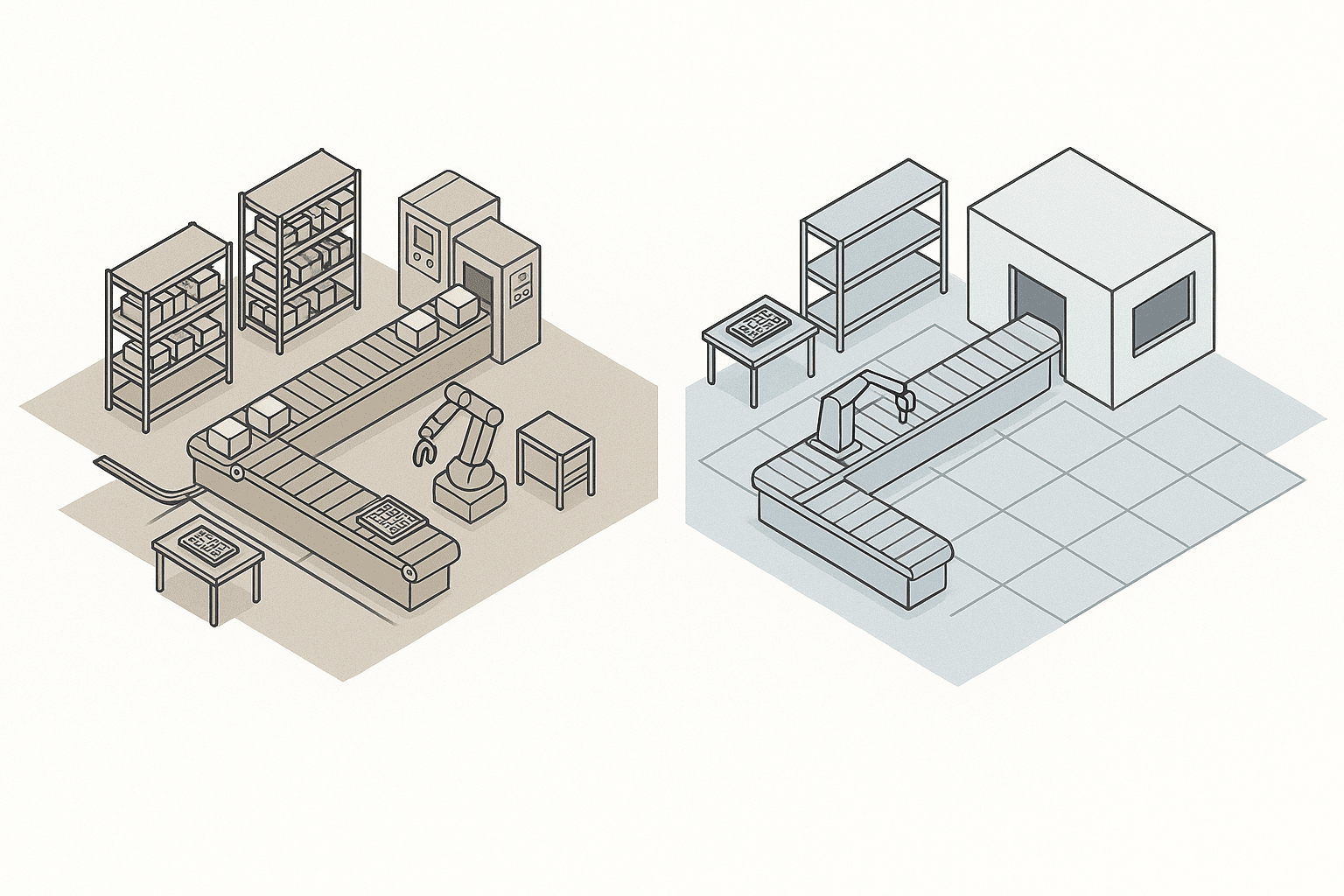
Here is the material so far, organized along axes you can use in an investment decision.
| Comparison axis | Thailand | Vietnam |
|---|---|---|
| Nature of tax incentives | Tied directly to the automation investment itself. Three-year corporate income tax exemption, capped at 50% as a rule, with 100% conditional on 30% or more Thai-made machinery | Determined by industry sector priority. Resolution 10 favors technology-intensive fields such as semiconductors, AI, and electronic components, with labor-intensive assembly relatively deprioritized |
| Center of gravity by industry | Upgrading existing manufacturing sites. Equipment renewal across a wide range of industries can qualify | Driven by large new high-value-added projects in semiconductors, AI, and electronic components |
| Shape of FDI growth | Sharp increase on an application basis in H1 2026. The Smart and Sustainable scheme drew 132 applications worth USD 507.6 million, of which machinery, automation, and robotics accounted for 82 applications worth USD 387.4 million | Over USD 38 billion on a registered basis from January to July 2026, up 58% year on year. Driven by large projects rather than a broadening of project counts |
| Labor cost trends | Minimum wage of 337 to 400 baht per day varying by province, with a national average of around 374 baht. No moves toward a further increase during 2026 are visible at present. Employer social security contributions are rising separately | Expansion of technology-intensive clusters means competition intensifies for engineers in maintenance and electrical control rather than for operators |
| Infrastructure and supplier layer | Dense industrial agglomeration makes local sourcing of jigs, frames, maintenance, and electrical work straightforward. The BOI has also built the domestic machinery ratio into its incentive conditions | Agglomeration is still forming. Constraints on local sourcing of spare parts and jigs can remain depending on the field and region |
| Main source of FA payback | Beyond labor reduction, gains accumulate from equipment renewal, quality stability, and improved energy intensity | Rather than labor reduction, the main axis of payback tends to be supporting production increases and building in quality |
| Position in site strategy | Fits a direction of upgrading existing lines and having the site serve as the ASEAN mother plant | Fits a direction of adding capacity in step with demand growth and raising technology intensity |
Three points come out of this table.
First, Thailand’s incentive is designed around the act of automating, while Vietnam’s is designed around industry sector. So in Thailand, the automation investment itself is the entry point to the privilege regardless of industry. In Vietnam, which industrial sector your company falls into takes effect first. Even for the same automation investment, the route to reaching the scheme is different.
Second, the role of labor cost differs between the two. In Thailand, the driver of automation is less the rise in the minimum wage than the increase in employer social security contributions and the difficulty of securing people. In Vietnam, the constraint is starting to be competition for engineers rather than operator wages. Neither can be explained by the simple picture of “wages are spiking, therefore automate.”
Third, the depth of the supplier layer affects operations more than it affects the investment decision. It barely shows up in a quotation comparison at installation. It shows up in availability rates and maintenance costs in year three. That Thailand has the edge here is corroborated by the very fact that the BOI has built the domestic machinery ratio into its incentive conditions.
With that said, we do not recommend using this comparison as material for picking one country over the other. The real decision is not which country, but which processes go to which site and what level of automation goes in there — a question of allocation. If you want to align the internal understanding of what the term FA even covers, sharing our overview of factory automation first tends to make cross-site discussions converge more easily.
The variables that matter beyond labor shortages and wages
FA capital requests still commonly calculate payback as “number of operators removed multiplied by labor cost.” In ASEAN in 2026, however, the variables that fall outside that formula are the ones with real operational impact.
Social security costs matter more than the minimum wage
Thailand’s minimum wage sits in a range of 337 to 400 baht as of 2026, varying by province. The national average is roughly 374 baht. No moves toward a further increase during 2026 are visible at present. In other words, the explanation that “Thai wages are spiking so we must automate” does not accurately reflect reality, at least as far as the minimum wage figures alone are concerned.
What is unmistakably rising, on the other hand, is the social security burden. With the monthly ceiling on social security contributions raised from 750 baht to 875 baht, the employer’s cost increases by roughly 1,500 baht per employee per year. The government has signaled support for companies handling wage increases by preparing a low-interest loan facility on the order of 30 billion baht, but that is cash flow support and does not make the burden itself disappear.
At 1,500 baht per person per year, the number does not look large on its own. But at a plant of 1,000 people it is 1.5 million baht a year, and it swells further once multiple sites are added together. What matters is that a cost of this kind is set by the scheme rather than negotiated in wage talks. It is not the sort of thing shop-floor effort can absorb.
The variable to use in a capital request, therefore, is not the rate of increase in hourly wages but the outlook for the total cost of continuing to employ one person. Once you set a figure that includes base pay, social security, recruitment cost, training cost, and the ramp-up losses that come with turnover, automation payback periods generally get shorter.
China Plus One and the expansion of Industry 4.0 investment
The other major variable is the China Plus One trend. According to ABI Research’s forecast, digital investment in Southeast Asia’s Industry 4.0 domain — robotics, automation, digitalization, data analytics and the like — is projected to expand from USD 75 billion in 2023 to more than USD 300 billion by 2028. That works out to roughly 32% CAGR.
Movement on the supply side is just as pronounced. Export volumes of Chinese robot arms increased roughly 4.45x between 2020 and 2025. Southeast Asia has become one of the largest destinations for China’s industrial robot exports. Beyond that, Chinese companies are increasingly positioning Thailand not merely as a sales destination but as a manufacturing base.
For Japanese manufacturers this cuts both ways. Procurement options expand and the chance of obtaining equivalent specifications at a lower price rises, while new issues appear around spare parts supply arrangements, documentation language, control platform compatibility, and communication protocol alignment with existing lines. Choose equipment from an initial-cost comparison table alone and none of this is visible.
It also intersects with the Thai BOI’s 30% domestic machinery condition described earlier. Supplier selection has to be viewed through price, maintenance, and incentives at the same time.
The depth of the supplier ecosystem
The availability rate of automation equipment is decided in year three, not at installation. Remaking jigs, supplying consumables, electrical work, calibration, on-site response to unplanned stoppages — in most cases these are handled by local suppliers, not the equipment maker.
Thailand has built this layer through years of industrial agglomeration. In Vietnam it varies by field and region, and areas that are still forming remain. So even if you install the same equipment at the same price, the total cost three years later will not be the same.
When you roll out identical specifications across sites, this gap surfaces in its most painful form. Taking a configuration that runs without trouble in Thailand and dropping it into Vietnam, only for spare parts procurement to drag and downtime to lengthen, is not unusual. Standardizing specifications is the right instinct, but maintenance structures and parts supply routes need to be redesigned site by site.
A practical checklist for Japanese manufacturers deciding on FA investment in ASEAN
The following items are worth confirming at either a Thai or a Vietnamese site. Clearing them in the stage before the investment decision — during concept development and rough costing — reduces rework later.
- Have you reconciled the three-year taxable income forecast with the finance department and placed a monetary value on the real worth of the tax incentive
- For a Thai project, does the qualifying capital investment reach THB 1,000,000 or more excluding land and working capital
- For a Thai project targeting the 100% cap, have you built the domestic machinery ratio into the design at the RFP stage
- Have you clarified whether your company is on the user side or the builder side of the privilege, and confirmed you are referencing the correct scheme
- For a Vietnamese project, have you mapped where your business sits in relation to the priority sectors under Resolution 10
- Have you broken the source of payback down beyond labor reduction into production increase capacity, quality stability, and energy intensity
- Have you set the labor cost variable as a total cost including social security, recruitment, training, and turnover losses rather than an hourly rate
- Have you compared equipment on more than initial cost, including spare parts lead times and whether local support is available
- Have you confirmed that the control platform and communication protocols align with existing lines and with equipment at other sites
- Do you have a realistic outlook for securing the maintenance and production engineering headcount to keep the equipment running after installation
- Where identical specifications are rolled out across sites, have you redesigned the maintenance structure and parts procurement route for each site
- Are you avoiding comparing the Thai and Vietnamese sites as standalone profit centers, and considering optimal allocation across the network as a whole
- Have you confirmed the application requirements and documentation approach for the privilege with a local specialist or the authorities before placing the order
- Are you able to discuss the investment decision at the granularity of which process goes where, rather than which country
Of these, the two most often skipped in practice are building the domestic machinery ratio into the design at the RFP stage, and comparing equipment with spare parts lead times included. The first cannot be recovered once the order is confirmed, and the second is only recognized as a problem after the line is running. Both can be avoided with a small amount of effort at the concept stage.
Frequently asked questions
For FA investment in ASEAN, is Thailand or Vietnam more advantageous?
The answer changes with the purpose of the investment. If you are upgrading lines at an existing site to capture labor reduction and quality stability at the same time, Thailand’s scheme is currently easier to use because the privilege attaches to the automation investment itself. If you are in a phase of adding production capacity in step with demand growth and raising the site’s technology intensity, that aligns with Vietnam’s policy direction. The two countries are shifting from a competitive relationship toward a division of roles, so we would suggest revisiting how the question of picking one of them is framed in the first place.
What indicators should you look at first when deciding on Southeast Asia automation investment?
Not the minimum wage or equipment prices, but two things — the total cost of continuing to employ one person, and the outlook for availability rate over the three years after installation. The first is base pay plus social security, recruitment, training, and turnover losses, and in Thailand the increase in the monthly social security contribution ceiling has raised the employer’s cost by roughly 1,500 baht per person per year. The second is determined by spare parts supply arrangements and whether local engineers can be secured. Calculate payback without setting these two and the investment decision drifts away from reality.
Is the BOI 100% exemption cap realistically achievable for Thailand automation equipment?
With an understanding of the conditions and procurement designed accordingly, it is within reach. The 100% cap applies only where 30% or more of the value of the automation and robotics machinery is linked to or backed by machinery manufactured in Thailand. Even assuming the robot itself is sourced from overseas, there is room for domestic sourcing in peripheral equipment such as conveyors, frames and stands, jigs, safety fencing, and control panels. The judgment method can be interpreted differently depending on how a project is structured, however, so confirmation with the BOI or a local specialist before ordering is a prerequisite.
For overseas factory automation, should headquarters or the local site lead?
A practical division is headquarters for specification standardization, and the local site for designing the maintenance structure and procurement routes. Letting equipment specifications and control platforms diverge site by site means redoing the design every time you roll out. At the same time, spare parts lead times and the availability of local engineers differ greatly by country, so importing the headquarters standard unchanged lengthens downtime after start-up. Drawing the line between what gets standardized and what gets redesigned locally, before the investment decision, is what matters.
Can you use the same automation specifications in Vietnam as in Thailand?
Even where the mechanical specifications carry over, operations may not work as-is. Vietnam’s supplier layer is still forming, and constraints on local sourcing of spare parts and jigs remain depending on the field and region. Even with identical quotations at installation, if recovery time from unplanned stoppages lengthens, the three-year total cost changes. We recommend standardizing equipment specifications while redesigning consumables inventory policy, emergency response arrangements, and calibration routing on a site-by-site basis.
Is small-scale automation below the THB 1,000,000 minimum excluded from the incentive?
Under the Smart and Sustainable Industry scheme, the requirement is qualifying capital investment of at least THB 1,000,000 excluding land and working capital. Small labor-saving investments that do not reach the threshold individually can, when redesigned as a single investment plan grouped by theme, add up to a scale that clears it. How far multiple projects can be treated as one qualifying investment is a matter of how the scheme is administered, so confirmation at the planning stage is necessary.
References
- The BOI “Smart and Sustainable Industry” exemption period, the conditions separating the 50% and 100% caps, the THB 1,000,000 minimum investment, and the content of the A1 category are based on Mahanakorn Partners, “Thailand’s BOI in 2026 – From Investment Incentives to Accelerated Project Delivery”, published August 11, 2026
- Vietnam’s FDI results for January to July 2026, the priority sectors under Resolution 10, and the 2026-2030 attraction target are based on DataCore, “Vietnam’s 2026 FDI Data”
- Thailand’s FDI trend in the first half of 2026, the application count and value under the BOI “Smart and Sustainable Industry” scheme, and the figures on industrial robot exports from China are based on reporting by Thailand Business News and other outlets
- The outlook for digital investment in Southeast Asia’s Industry 4.0 domain is based on an ABI Research press release
- Thailand’s minimum wage levels, the increase in the social security contribution ceiling, the government’s low-interest loan facility, the outlook for the size of Vietnam’s automation market, and the value of Thai investment into Vietnam are reference values based on publicly available research and reporting, and figures vary by source. For scheme details and the latest applicable conditions, please confirm with the relevant authorities or a local specialist
Summary
The FA investment environment in ASEAN in 2026 has taken on clearly different characters in Thailand and Vietnam. Thailand ties its privilege to the act of automating, and steers behavior by making the 100% cap conditional on 30% or more Thai-made machinery. Vietnam has set industry sector priorities through Resolution 10 and is driving a shift from labor-intensive to technology-intensive as a matter of policy.
This difference is not a question of which is better. It is a difference of role — Thailand is strong for upgrading existing lines, Vietnam for adding capacity and raising technology intensity. The practical question, therefore, is not which country to invest in, but which processes to place at which site and what level of automation to install there.
And the variables that decide that allocation are not wage levels. They are the real value of the tax incentive, procurement design, the feasibility of securing a maintenance structure, and the availability rate three years out. Whether you can lay these out and discuss them at the concept stage is what separates a successful investment from an unsuccessful one.
TOMAS TECH is based in Bangkok and supports FA implementation and production management system design at Japanese manufacturing sites in both Thailand and Vietnam. Questions such as designing procurement around BOI incentive requirements, or how far to align specifications across sites, are exactly the kind that repay being sorted out at the concept stage. You are welcome to get in touch even at the consideration stage, before any decision on whether to invest has been made — we would be glad to work through the issues with you. Reach us via the Contact page.


