


AI Agents Need a Supervised Control Tower First: Practical Notes as of June 21, 2026
If I compress the current AI trend into one operating idea as of June 21, 2026, it is this: the practical question is no longer how autonomous AI can become in theory, but which tasks should be delegated first, with what evidence, and under what approval flow.
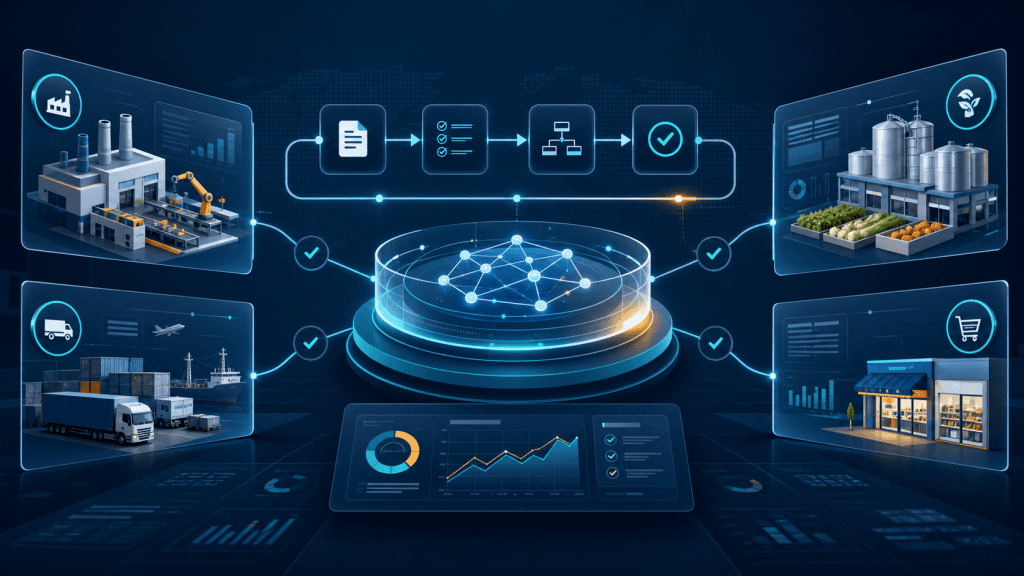
That shift matters for anyone tracking AI agents, Codex, Claude Code, and practical generative AI adoption. Public demos still reward the image of full autonomy. Real operating value usually comes earlier and more reliably from a different pattern: AI as a supervised control tower. The model reads the situation first, gathers exceptions, ranks what matters, and hands a structured brief to people who still own the final call.
After reviewing recent product launches and field evidence, that pattern looks especially relevant for manufacturing, logistics, food, and retail. These sectors have dense exception traffic, fragmented information, and short decision windows. That is exactly where supervised agents can create value before full automation is realistic.
Why Supervised Agents Are the Stronger Near-Term Bet
OpenAI introduced Codex on May 16, 2025 as a cloud-based software engineering agent that can work on many tasks in parallel and provide verifiable evidence through terminal logs and test outputs. Anthropic introduced Claude 4 on May 22, 2025 and emphasized sustained performance on long-running work. The current Claude Code documentation also makes the operating pattern explicit: run long tasks in the browser, check back later, and run multiple tasks in parallel.
The common signal is not just better conversation. It is delegated work with visibility.
That distinction matters. In business operations, trust grows when an AI system makes three things legible:
- What information it used
- What it completed versus what it deferred
- Where uncertainty remains
Without those properties, most organizations will see AI as interesting but operationally risky. With them, AI starts to look less like a chatbot and more like a governed work layer.
Codex and Claude Code Both Point Toward Delegation, Not Just Dialogue
Codex is valuable not only because it can answer questions, but because it can execute work in an isolated environment, proceed in parallel, and return an evidence trail. The direct product category is software engineering, but the operating lesson is broader.
Claude 4 and Claude Code point in a similar direction. Long-running tasks, background execution, parallel work, and tool use are all design choices for a world where people do not need to sit in a chat window to keep work moving.
That leads to a practical conclusion for enterprises: the first AI worth deploying is usually not a universal assistant. It is a supervised agent that takes over recurring pre-decision work inside a specific workflow.
In Manufacturing, Start with Exception Summaries and Corrective-Action Candidates
Manufacturing is not the place to rush into full autonomy. It is, however, a strong fit for AI agents around maintenance history summarization, incident triage, document retrieval, and corrective-action preparation.
Recent smart manufacturing roadmaps and agentic AI research suggest the same pattern: the fastest value appears not when humans are removed from the loop, but when people receive better materials before they decide.
A practical starting scope in manufacturing is narrow and measurable:
- Aggregate overnight alerts
- Pull similar incident history
- Draft corrective-action options
- Build a short morning brief for maintenance and quality teams
This is easier to govern than end-to-end automation, and it connects naturally to measurable operating outcomes.
In Logistics, the Winning Pattern Is “Collect at Night, Hand Over in the Morning”
Logistics may be one of the best near-term fits for AI agents because exceptions are constant, information sources are scattered, and response windows are short.
The January 14, 2026 supply chain disruption monitoring paper reports end-to-end analysis in a mean of 3.83 minutes at a cost of $0.0836 per disruption, more than three orders of magnitude faster than multi-day analyst-driven assessments. The April 7, 2026 Flowr paper for supermarket supply chains describes a human-in-the-loop orchestration model, via an MCP-enabled interface, that reduces manual coordination overhead and enables proactive exception handling at scale.
Those results point toward a clear operating model. In logistics, AI agents do not need to “run the network” first. They can create immediate value by gathering signals overnight, identifying exposed routes, suppliers, SKUs, or facilities, and handing a prioritized brief to humans before the first coordination meeting.
A strong initial workflow looks like this:
- Collect weather, port, supplier, and news signals overnight
- Map likely impact to routes, facilities, and inventory
- Draft mitigation options
- Deliver a one-page morning escalation brief
That is a realistic control tower pattern, not a speculative autonomy story.
In Food, Knowledge Connection Often Matters More Than Full Process Automation
In food, AI discussions often drift toward production automation or demand forecasting. Those matter, but the November 17, 2025 white paper on AI in food manufacturing highlights a broader agenda: supply chain coordination, formulation and processing, consumer insight, nutrition, and workforce development, all supported by interoperable data, interpretability, and cross-sector collaboration.
That is why a practical food-sector entry point is often knowledge connection rather than direct autonomous action. The useful first agent is the one that connects ingredient data, quality specifications, allergen constraints, audit records, complaint history, and commercial updates into a form that teams can actually act on.
Examples include:
- Finding impact areas when a product specification changes
- Summarizing document differences when ingredients change
- Flagging missing items before a quality audit
- Creating a shared brief across sales, quality, and production
Food operations are too sensitive to start with blind automation. A supervised control tower is the better first layer.
In Retail, the Upside Is Both Revenue and Variance Reduction
Retail is one of the clearer places to see measurable generative AI value. The October 14, 2025 field experiments in online retail found that some workflows produced sales gains of up to 16.3%. The February 8, 2026 Alibaba customer service study found that lower-performing workers saw the largest gains in speed and quality, narrowing the performance gap.
That combination matters. It suggests that generative AI can do more than cut labor minutes. In the right workflow, it can improve customer experience, drive revenue, and reduce performance variance across teams.
A practical retail rollout often starts with:
- Summarizing store and e-commerce inquiries
- Drafting product copy and promotional text
- Ranking stock-out, return, and review issues by urgency
- Producing daily summaries that align store operations and headquarters
Again, the strongest early pattern is supervised assistance, not blind automation.
Prioritize Observability Before Full Automation
The biggest lesson from the current wave of AI agent products and field studies is that workflow observability matters as much as model capability.
Early success metrics should not focus only on abstract model quality. They should track whether the agent:
- Detected exceptions earlier
- Reduced first-pass investigation time
- Assembled usable evidence for a decision
- Reduced dependence on a few highly experienced individuals
When those metrics improve, the project is more likely to survive beyond a pilot.
Closing Note
As of June 21, 2026, the most credible AI trend for business operations is not “AI can do everything.” It is that AI agents are becoming useful as supervised control towers that collect evidence, surface exceptions, and prepare human decisions faster.
Codex and Claude Code both point in that direction. So do the emerging results in logistics, retail, food, and manufacturing. The first serious AI agent in an enterprise should not replace final judgment. It should improve the speed and quality of judgment by arriving with context already organized.
That is a smaller promise than full autonomy. It is also a much better place to start.
FAQ
How is an AI agent different from a normal generative AI chat tool?
Chat tools are mainly conversational. AI agents are designed to take on tasks, use tools, run for longer, and return progress or results. In operations, the critical difference is governance: evidence, repeatability, and connection to approval workflows.
Why are Codex and Claude Code relevant outside software teams?
Because their product design reveals the broader operating model: parallel execution, asynchronous delegation, visible work logs, and human review. Those same design principles apply to business workflows that involve research, triage, and exception handling.
Why not automate everything from the start?
Because real operations require auditability, exception handling, quality control, and accountability. Starting with supervised agents makes failure modes visible and helps organizations learn where human review must remain in place.
Which of the four industries is the easiest place to start?
For many companies, logistics or retail information workflows are the most practical first step because exceptions are frequent and time-sensitive. But manufacturing and food teams can also start effectively if they begin with daily briefs, incident summaries, or document intelligence.
What should executives measure first?
Useful early KPIs include first-pass investigation time, time-to-escalation, evidence completeness, and reduction in workflow variance across teams. Those are often better early indicators than broad ROI claims.
References
- OpenAI, “Introducing Codex,” May 16, 2025
- Anthropic, “Introducing Claude 4,” May 22, 2025
- Anthropic, “Overview – Claude Code Docs”
- AlMahri, Xu, Brintrup, “Automating Supply Chain Disruption Monitoring via an Agentic AI Approach,” Jan 14, 2026
- Bandara et al., “Flowr — Scaling Up Retail Supply Chain Operations Through Agentic AI in Large Scale Supermarket Chains,” Apr 7, 2026
- Zhou et al., “The Future of Food: How Artificial Intelligence is Transforming Food Manufacturing,” Nov 17, 2025
- Fang et al., “Generative AI and Firm Productivity: Field Experiments in Online Retail,” Oct 14, 2025, revised Jun 2, 2026
- Ni et al., “Generative AI in Action: Field Experimental Evidence from Alibaba’s Customer Service Operations,” Feb 8, 2026
Related Articles
- Start AI Agents with a Verification Layer: Practical Notes as of June 22, 2026
- What Companies Should Do in the Age of AI Agents: Practical AI Use in Manufacturing, Logistics, Food, and Retail
- What It Takes to Put AI Agents Into Business Operations: Notes as of June 14, 2026
- AI Adoption Now Needs an Operating Model, Not Another Pilot: Notes as of June 15, 2026


