


Any serious discussion of automation or robot investment in Thailand eventually arrives at the same question — can we use the BOI corporate income tax exemption for this? In most cases the answer is yes. What actually matters in practice, however, is not whether you qualify but which cap applies: whether the exemption is limited to 50% or 100% of the investment. On a project in the tens of millions of baht, that split translates directly into millions of baht of tax, and the condition that decides it can only be influenced before the equipment specification is frozen. This article lays out the structure of the BOI’s Smart and Sustainable Industry measure and shows how to build that decision point into the investment plan itself.
What is the BOI Smart and Sustainable Industry measure?
The Smart and Sustainable Industry measure is an investment promotion scheme established by the Thailand Board of Investment (BOI) under Announcement No.15/2565, dated 8 December 2022. It has been in operation since that December 2022 announcement and remains an active scheme as of 2026.
The first thing to understand about this measure is that, unusually among BOI incentives, it targets factories that are already running. Traditional BOI benefits were designed around “new projects” — incorporating a new entity, building a new plant, or launching a project in a new business category. As a result, an existing factory that entered Thailand ten or twenty years ago, whose incentive period expired long ago, has had very few frameworks available when it wanted to replace ageing equipment with an automated line.
The Smart and Sustainable Industry measure was created to fill that gap. It grants corporate income tax exemption for investment aimed at improving productivity, saving energy, digitalising operations, and raising sustainability at existing factories. Depending on the sub-measure, exemption of import duty on machinery is also attached. In other words, the building and the legal entity stay as they are, and only the contents of the production line are replaced — and that investment qualifies.
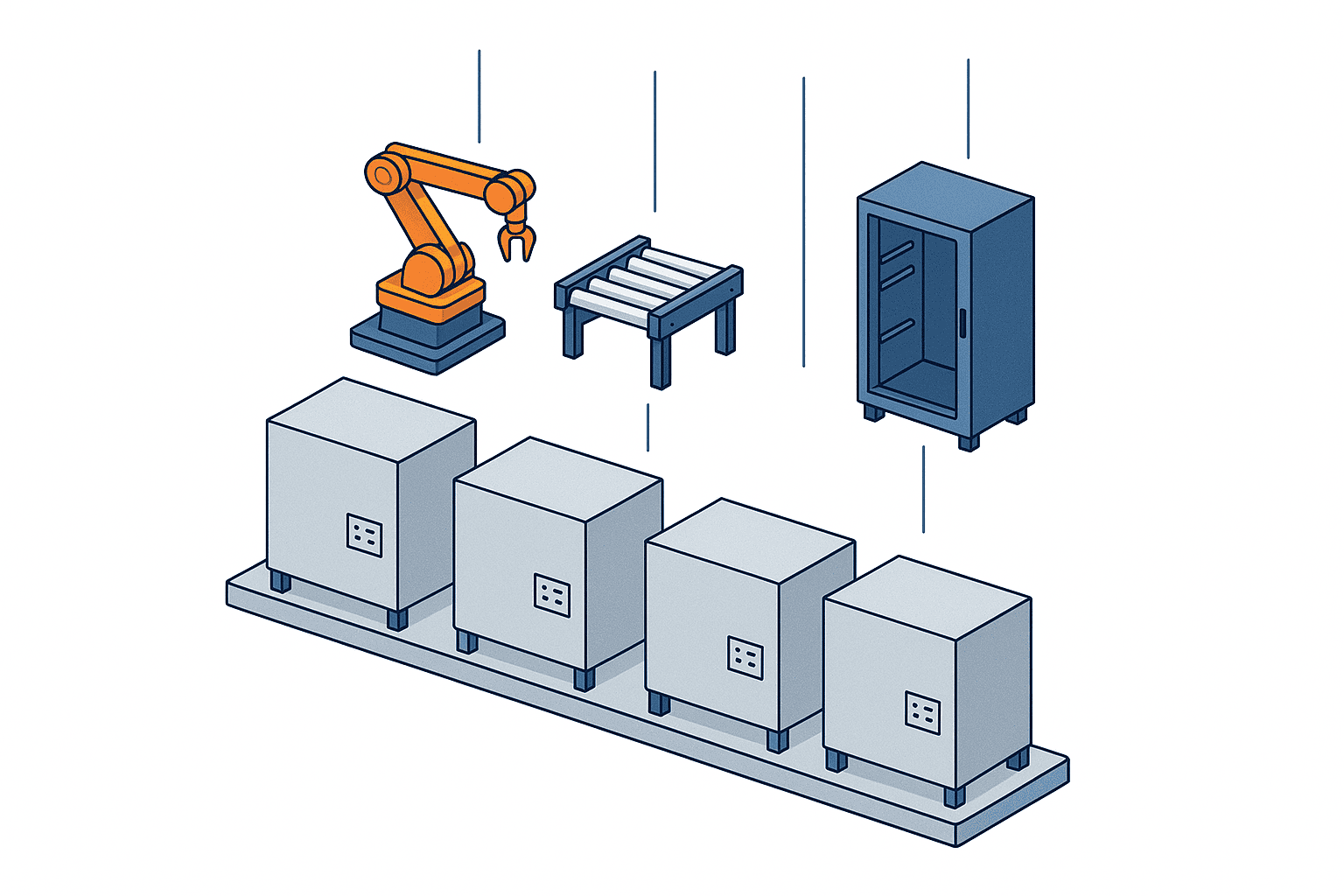
The target is the running factory, and non-BOI plants can apply
Eligible applicants are existing businesses (whether or not they are BOI-promoted projects) or new Group B projects. For an existing business, the premise is that at the time of application the business falls within the scope of activities eligible for BOI investment promotion.
The important point here is that a factory that has never received a BOI incentive can still apply under this measure. Quite a few Japanese-affiliated plants rule this out from the start on the grounds that “we are non-BOI, so it does not apply to us” — that premise is simply wrong.
On the other hand, projects that already hold BOI promotion face a condition. The official guide requires that a BOI-promoted project applying under this measure must have already exhausted its corporate income tax exemption benefit, or must never have been granted a corporate income tax exemption at all. Put plainly, a project currently inside its corporate income tax exemption period cannot stack this measure on top of it. The intended position is that an older project whose incentive period has expired uses the measure again for its next round of equipment renewal. Getting this wrong means the application does not stand up at all, so check the incentive period on your own BOI certificate (Promotion Certificate) first.
Some business categories are excluded, however. Under measure 1.1, the exclusion list covers manufacture of ordinary passenger cars, manufacture of motorcycles (except those with engine displacement below 248cc), manufacture of PHEV and HEV electric vehicles, manufacture of cement, coil centres, health rehabilitation centres, coworking spaces, TISO, IBC and IPO. For electric vehicles the exclusion is limited to PHEV and HEV — manufacture of BEVs and BEV platforms is not on the exclusion list. The same exclusion list applies to the 2.x measures for new Group B projects.
What deserves attention is that this exclusion list differs from measure to measure. Measure 1.2, for the adoption of digital technology, additionally excludes a wider range including software and digital platform development, data centres, cloud services, smart city related activities and smart logistics centres. Conversely, under measure 1.4 for energy saving and reduction of environmental impact, manufacture of automobiles and motorcycles is not on the exclusion list (for cement manufacture, application is possible only for machinery renewal aimed at reducing greenhouse gas emissions). Whether you can apply at all therefore depends on which BOI business category your operation is classified under. That classification is not something you can decide for yourself, so you need to sound out the BOI or an experienced practitioner during the concept phase of the investment.
The minimum investment for existing businesses is 1 million baht, excluding land and working capital
For the 1.x measures aimed at existing businesses, the monetary threshold is at least 1 million baht, excluding the cost of land and working capital. That is roughly JPY 4.5 million (converted at THB 1 = JPY 4.5), a level that is comfortably reached by a single robot plus its peripherals, or by automating the material handling and inspection on one line. The image of BOI as “a scheme for large investments” tends to run ahead of the facts, but for this measure in particular, a line upgrade at a mid-sized factory is squarely within range. If you want to start small, we have also covered the approach in Robot Implementation for SMEs 2026 — How to Start Small and Use BOI Incentives.
Note that this 1 million baht requirement is set for the measures aimed at existing businesses. For the 2.x measures covering new Group B projects, the official guide states no such monetary requirement.
Meanwhile, the qualifier “excluding land and working capital” carries through consistently into the later calculations, because the exemption cap itself is set as a percentage of the eligible investment (excluding land and working capital). Understanding that the total investment figure you put in the internal approval document and the eligible investment figure the BOI calculates on are two different things will prevent a lot of confusion later.
The five measures and their exemption caps at a glance
Smart and Sustainable Industry is not a single benefit but a bundle of measures. Measures 1.1 through 1.5 serve existing businesses, and the 2.x measures serve new Group B projects; the exemption cap changes depending on which one you apply under.
| Measure | Main target of investment | Corporate income tax exemption cap |
|---|---|---|
| 1.1 Machinery and automation upgrade / replacement | Introduction of automation systems into the production line meeting the prescribed indicators, and modernisation or replacement of non-automated machinery | 3 years, 50% of the eligible investment (100% if the requirement is met) |
| 1.2 Adoption of digital technology | Software, AI, use of big data | 3 years, 50% of the eligible investment |
| 1.3 Transition to Industry 4.0 | Combined implementation of automation and network technology, data analytics and smart operations, and adoption of digital technology | 3 years, 100% of the eligible investment (NSTDA approval required) |
| 1.4 Energy saving, alternative energy, reduction of environmental impact | Energy-saving equipment, adoption of alternative energy, investment that lowers environmental impact | 3 years, 100% of the eligible investment |
| 1.5 Production line improvement toward international sustainability certification | Upgrading the production line to obtain international certifications such as GAP, FSC, PEFC and food safety management | 3 years, 100% of the eligible investment |
Two separate measures are provided for new Group B projects. Measure 2.1, adoption of automation and robotics, covers the introduction of automation or robot systems into manufacturing or service processes; the cap is 50% of the eligible investment, raised to 100% where the linkage with or support for automation systems made in Thailand accounts for at least 30% of the value of the automation and robotics system. Measure 2.2, transition to Industry 4.0, requires NSTDA approval and carries a cap of 100% of the eligible investment. Whether you are an existing business or a new project only changes the number on the door; the underlying logic that separates 50% from 100% is the same.
The detail most easily missed in this table is that the three-year exemption period is common to every measure — what changes is only the cap. A BOI corporate income tax exemption does not mean “three years entirely tax free”. A ceiling is placed on the total amount of corporate income tax that can be exempted, and that ceiling is set at 50% or 100% of the eligible investment. So if you consume the ceiling faster than three years, ordinary taxation resumes from that point. Conversely, if the three years run out before you have used the ceiling, the remainder simply goes unused (the finer points of administration, such as whether any unused allowance can be carried over, depend on the conditions in the certificate and on BOI practice).
It follows that the real value of this benefit is the smaller of two figures — the ceiling, and the corporate income tax actually arising over three years. Arguing about whether the ceiling is large or small in isolation is meaningless; it only becomes a monetary figure once you set it against your own profit level. The worked example below makes this concrete.
The 30% domestic linkage requirement that decides 50% or 100%
This is the heart of the article. Measure 1.1, machinery and automation upgrade / replacement — by far the most used route for automation and robot investment — carries a corporate income tax exemption capped in principle at 50% of the eligible investment over three years. Exemption of import duty on machinery is attached as well.
That cap, however, has an uplift clause. Where the automation system or robots used in the production line or service process have linkage with or support for the automation industry in Thailand amounting to at least 30% of the value of the machinery being replaced, the cap is raised to 100% of the eligible investment. For the same investment amount and an outwardly identical equipment configuration, meeting this requirement doubles the exemption allowance.
Pay attention to the denominator. What the wording of measure 1.1 uses as its basis is not the total investment but the value of the machinery being replaced (under measure 2.1 for new Group B projects, the denominator is defined as the value of the automation and robotics system). If you calculate the 30% against a total investment figure that includes software and cloud costs, you will understate your actual position.
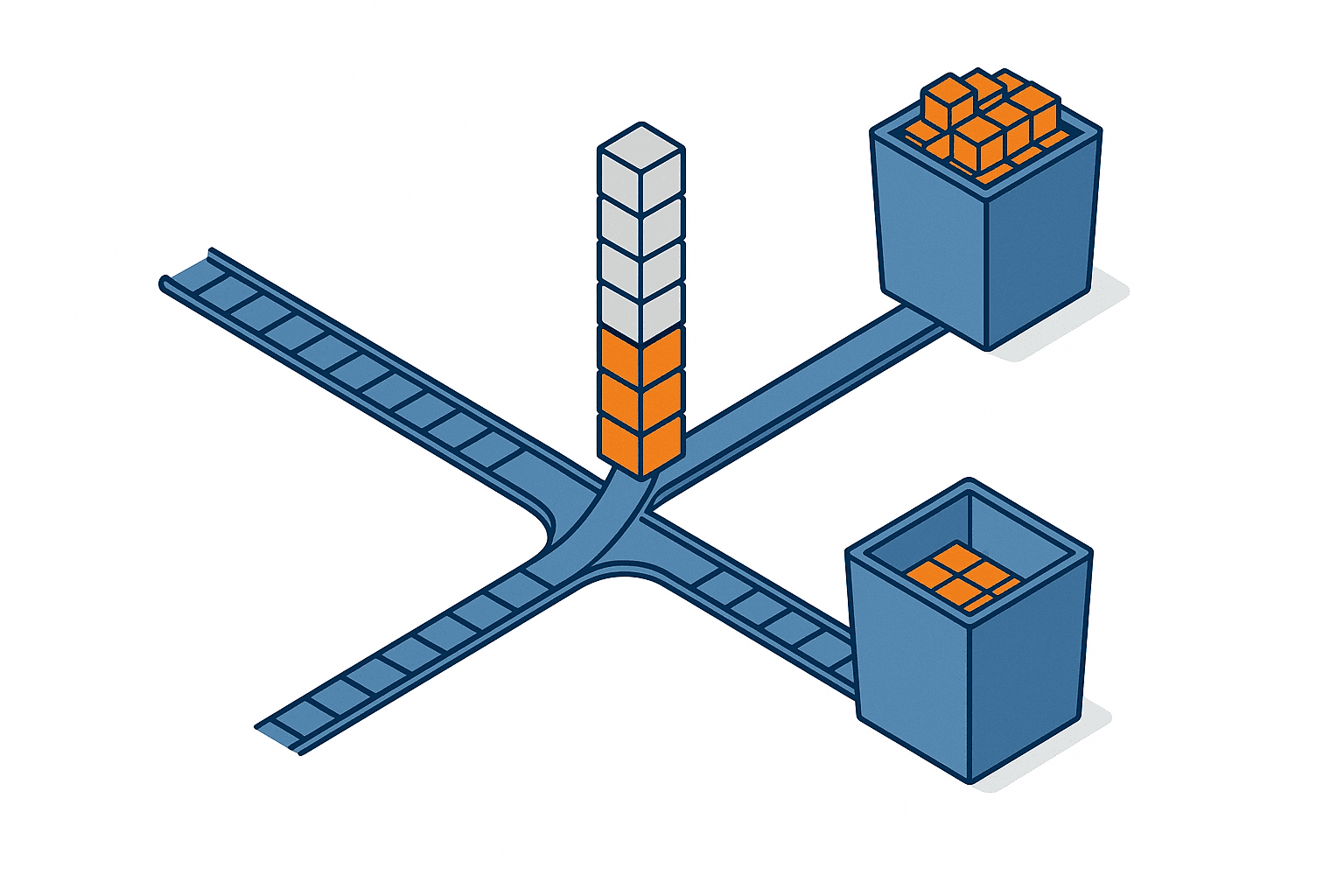
The 30% requirement is about how you build it, not where you buy it
If you read this requirement as “buy Thai-made robots”, it is unachievable from the outset. The great majority of industrial robot bodies operating in Thailand are imported from Japan, Europe and China, and sourcing that closes the loop inside Thailand down to the robot arm itself is not realistic.
What the requirement looks at is what proportion of the value of the machinery being replaced is carried by the automation industry in Thailand. Break automation equipment down into its constituent parts and a clear line appears between what must be imported and what can be fabricated or sourced within Thailand.
| Component | Ease of fabrication / sourcing within Thailand |
|---|---|
| Robot body, servo motors, reducers | Almost entirely imported. Hard to count toward the domestic share |
| Vision sensors, displacement sensors, safety sensors | Mainly imported. Even more fixed when a brand is specified |
| Control devices such as PLCs and servo amplifiers | The devices are imported, but panel integration is done locally |
| Control panel design, fabrication and wiring | Readily completed by panel builders in Thailand |
| Frames, structures, safety fencing, covers | Sheet metal, welding and machining are all easily sourced in Thailand |
| Conveyors, chutes, stockers and other material handling | Both standard and custom-built items can be made in Thailand |
| Jigs, grippers, fingers, workpiece nests | Can be sent to machine shops in Thailand given the drawings |
| Installation, wiring, teaching and commissioning man-hours | Falls on the domestic side if a local SI does it, but eligibility for inclusion needs confirmation |
As the breakdown shows, whether you can meet the 30% requirement is decided less by the equipment you select than by how you divide up the scope and which system integrator you choose. Looking only at the robot body and concluding “it is imported, so this is impossible” is premature. In practice, on a project that builds a complete line, the combined share of frames, material handling, jigs and control panels in the value of the machinery being replaced is far from negligible.
That said, the BOI’s official guide does not spell out the method for calculating the 30% down to the level of individual components. The table above is a practical framing of which elements can stand on the Thai side; whether engineering man-hours such as installation, wiring and teaching count toward the numerator is a judgement that varies with the content of the project. This is a point to confirm directly with the BOI before applying.
There are three practical implications.
First, do not take the quotation as a single lump sum. A one-line quotation reading “automation line, complete, 12 million baht” leaves you with no material at all from which to calculate the domestic share. To argue the requirement, you need a breakdown by component and documentation showing where each is fabricated or sourced. The most reliable approach is to write into the RFP, as a stated requirement, that bidders must submit a cost breakdown of the elements fabricated or procured within Thailand. On aligning the granularity of quotations, see Automation Quote Comparison 2026 — Setting the Scope Baseline Before You Line Up Prices.
Second, whether the system integrator has a working base inside Thailand feeds directly into how well you meet the requirement. A setup in which design and fabrication are completed overseas, the finished equipment arrives in a container and only installation happens locally leaves no room for the domestic share to rise. Conversely, with an SI that holds design, fabrication and installation functions inside Thailand, the same line specification naturally accumulates value on the domestic side. If you are targeting the incentive, it is worth adding a line on this to your SI evaluation criteria. We have summarised the selection process in Robot System Integrator Selection in Thailand 2026 — RFP, Safety and FAT/SAT Practice Guide.
Third, there is a side benefit — splitting the equipment with the requirement in mind also improves maintainability. If frames, material handling and jigs are fabricated in Thailand, modifications after mass production begins, when the workpiece changes, can also be handled locally. This is not optimisation purely for the sake of the incentive; the resulting design tends to be sound over the whole life of the line, which makes it usable material in the internal approval argument as well.
One related point: in assembly automation, part tolerance management decides success or failure more than equipment precision does. The issues worth pinning down alongside the incentive design are covered in Assembly Automation Robots 2026 — Part Tolerance, Not Precision, Decides the Outcome.
What doubling the cap actually changes in money terms
Discussion of the ceiling tends to stay abstract, so let us look at simplified numbers. As a premise, the corporate income tax exemption under this measure is granted on income arising from the existing project. You do not carve out the revenue of the new line and calculate on that alone; the allowance is applied against the income of the existing business. Here we assume a factory that makes an automation investment with an eligible investment of 10 million baht and generates 30 million baht of taxable income over the three-year incentive period. Thailand’s corporate income tax rate is 20%.
| Item | Case with a 50% cap | Case with a 100% cap |
|---|---|---|
| Eligible investment (excluding land and working capital) | 10,000,000 baht | 10,000,000 baht |
| Corporate income tax exemption ceiling | 5,000,000 baht | 10,000,000 baht |
| Taxable income over three years (assumed) | 30,000,000 baht | 30,000,000 baht |
| Corporate income tax over three years (at 20%) | 6,000,000 baht | 6,000,000 baht |
| Amount actually exempted | 5,000,000 baht (capped out) | 6,000,000 baht (within the ceiling) |
| Difference against the 100% cap case | 1,000,000 baht worse off | — |
This calculation is a simplified illustration; the actual exempted amount will vary with the conditions in the certificate, the timing of earnings and the interaction with other incentives. Even so, two structural implications can be read from it.
The first is that doubling the ceiling does not necessarily double the amount actually exempted. What is exempted is only up to the corporate income tax that actually arises, and a large ceiling is of no use if the profit is not there. In this example, doubling the cap produces a difference of only 1 million baht.
The second is the flip side of that — the more profitable the factory, the greater the value of the 100% allowance. Suppose the same factory generated 75 million baht of taxable income over three years; the corporate income tax would be 15 million baht. With a 50% cap it stops at 5 million baht, whereas a 100% cap allows exemption up to 10 million baht. The gap widens to 5 million baht. In other words, the factories with the strongest economic case for chasing the 30% requirement are those that have already established a profitable base and are layering capacity expansion or labour-saving investment on top of it. Conversely, a factory running at a loss with no taxable income in prospect should settle the payback plan for the investment itself before debating caps.
The other route to 100% — the Industry 4.0 transition measure
Separately from the 30% requirement under measure 1.1, there is a second path to a 100% cap: measure 1.3 (or 2.2 for a new Group B project), the Industry 4.0 transition measure.
This route presupposes combining several domains — automation and network technology, data analytics and smart operations, and the adoption of digital technology — and requires approval from NSTDA (the National Science and Technology Development Agency of Thailand). Installing a single robot will not get you there. But where you are planning equipment automation together with the platform for collecting and analysing operational data, energy monitoring and the production management system as one integrated programme, this route can reach 100% more naturally.
The practical implication is that splitting the “automation project” and the “system project” into separate internal approvals can forfeit a 100% you would otherwise have reached. The engineering department submits the robot approval, and six months later the IT department submits the MES approval — a natural sequence in internal decision-making, but two separate projects as far as the BOI application unit is concerned. Draw the overall picture of your FA rollout first, then cut the investment units from it, and this loss is avoidable. For the overall approach to FA, see What Is Factory Automation — The Full Picture and How to Roll It Out in 2026.
Rules on what counts as investment — only core enterprise software and cloud are halved
Alongside the question of what percentage of the eligible investment the cap represents sits an equally important one: what actually counts toward that eligible investment. The inclusion table for measure 1.1 is as follows.
| Object of investment | Proportion counted |
|---|---|
| Machinery and equipment | Full amount |
| Software / IT integrated into machinery and equipment that controls, monitors or supports the production process | Full amount |
| Use of AI, machine learning, big data and data analytics | Full amount |
| Enterprise management software / IT developed by a developer in Thailand and certified by a relevant agency approved by the BOI | Full amount |
| Enterprise management software / IT without the above certification, or developed by an overseas developer | Half amount |
| Cost of using cloud services or data centres located in Thailand | Full amount |
| Cost of using cloud services or data centres located overseas | Half amount |
| Cost of land | Not eligible |
| Working capital | Not eligible |
The most commonly misread item in this table is the treatment of software. The “half unless developed in Thailand” condition applies only to enterprise management systems such as ERP. Software embedded in equipment that controls, monitors or supports the production process, and investment in the use of AI, machine learning, big data and data analytics, counts in full regardless of who developed it. Even when an AI model for visual inspection or an analytics platform for equipment operating data is built together with an overseas vendor, it is not halved provided it sits in that category. Writing off software investment across the board as “halved, so it does not help with the incentive” means cutting your own eligible amount.
Where the half-amount line actually bites is in two places — the choice of cloud region and the procurement route for core enterprise packages.
On cloud, when systems such as MES, energy monitoring or equipment operation dashboards are built on SaaS or IaaS, it is very common for the contract to be signed without any thought to the region, leaving the default Singapore or Japan region in place. Technically there is nothing wrong with that, but in terms of the amount counted it is halved. Where a configuration allowing a Thailand region is available, the same spend counts for twice as much.
On the core systems side, the approach of “rolling out the global standard ERP package adopted by overseas headquarters to the Thai plant as well” lands on the half-amount side. Of course you should not bend your system selection criteria purely for the sake of an incentive, but it does no harm to know that when the options line up with equivalent functionality at an equivalent price, the inclusion ratio becomes one input into the decision. The larger the investment, the more this matters.
Also, given that land cost and working capital are outside the scope, equipment renewal that is completed inside an existing building sits well with this measure. Bundling it with a plan to construct a new building only makes the eligible investment calculation more complicated.
From application to start-up within three years — why to check before freezing the specification
The time axis matters as much as the content of the scheme. This measure sets two time-based criteria.
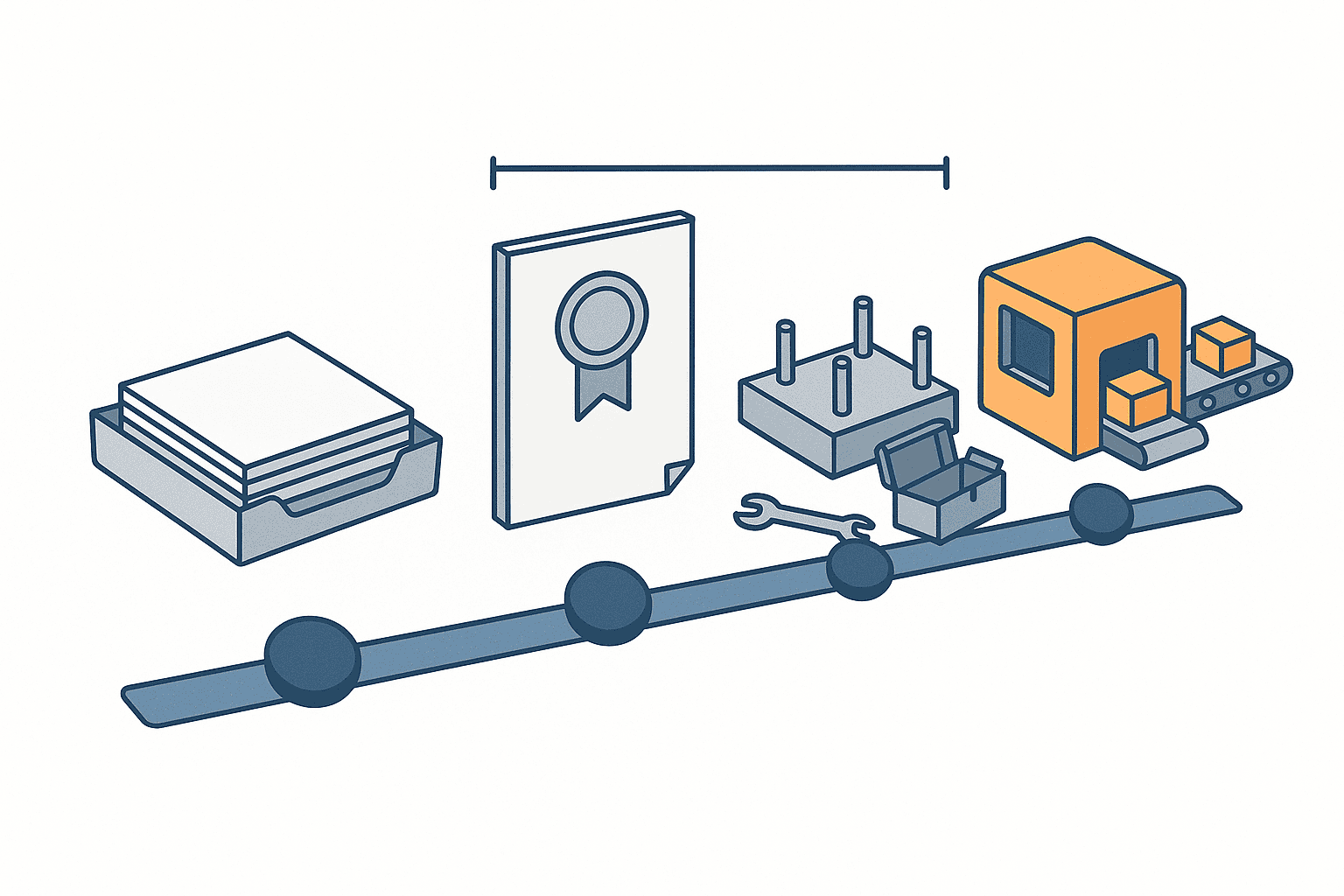
The start of the exemption, and the three-year deadline from certificate issuance
The corporate income tax exemption period is counted from the date revenue is first earned after the Promotion Certificate is issued. The starting point is not the date the certificate comes out, but the date revenue arises after that.
At the same time, the upgrade must be completed and operations started within three years of the date the certificate is issued. In other words, a clock starts under which the design, fabrication, installation and commissioning of the equipment must all be finished after you obtain the certificate.
On an automation line project it is not unusual for a year to eighteen months to pass between concept and the start of mass production. Three months to fix the specification, two months to select and contract the SI, six months for design and fabrication, three months for installation plus FAT/SAT, two months to stabilise the transition into mass production — that build-up is a standard schedule. A three-year deadline looks generous, but obtain the certificate too early and the clock starts while the specification is still unsettled. Obtain it too late and you fall into the pitfall described below.
| Stage | Main activities | What to check from the incentive standpoint |
|---|---|---|
| Concept | Selecting the target process, grasping the rough investment amount | Whether the business category is on the exclusion list, whether it exceeds 1 million baht |
| Outline configuration | Rough allocation of line components and scope split | Whether a configuration reaching the 30% requirement is realistic, and whether to target 1.1 or 1.3 |
| RFP | Specifying required specifications and documents to be submitted | Include the cost breakdown of domestically fabricated and sourced items as a stated requirement |
| Quotation and selection | Comparing bids, deciding the SI | Whether quotations are aligned at a granularity that allows the domestic share to be calculated |
| Application | Applying to the BOI, responding to review | Whether you can explain the split between eligible and ineligible items |
| Certificate issuance | Obtaining the Promotion Certificate | Reflect in the schedule that a three-year deadline runs from the issuance date |
| Implementation | Design, fabrication, installation, commissioning | Whether the schedule allows operations to start within the deadline |
The pitfall is checking after the specification is frozen
The most common failure is the sequence in which the equipment specification and the quotation are frozen, internal approval is obtained, the order is placed, and only then is the incentive eligibility checked. In that sequence, once you discover the requirement is not met, only two paths remain open.
One is to change the equipment configuration in order to meet the requirement. But design work is already under way by this stage; changing it means requoting, the delivery date slips back, and in some cases SI selection has to be restarted. On projects where the ramp-up date for expanded capacity is already fixed, that delay is frequently unacceptable.
The other is to give up the incentive and proceed with the original specification. Here the schedule holds, but the payback period presented in the internal approval was based on a different premise. With an exemption allowance in the millions of baht disappearing, the very basis on which the investment decision was approved can collapse.
What creates this dilemma is not that the check came late, but that the order of the check was inverted. The 30% requirement is not a question of which products you buy but of how the line is configured and where it is fabricated, so it can only be moved before the configuration is settled. The correct sequence is therefore: outline configuration, then a first read on the BOI requirements, then RFP, then quotation, then internal approval, then application. At the outline configuration stage, adjustments such as shifting frames and material handling to local fabrication, or giving the Thai side responsibility for jig design and fabrication, can be made with almost no impact on cost or delivery.
The payback period in the approval document changes with the incentive
Another practically important point is that the presence or absence of the incentive feeds directly into the payback calculation. Because corporate income tax exemption lifts after-tax cash flow, the same equipment delivering the same effect pays back faster. There really are projects where whether the incentive is built into the approval stage decides whether the approval hurdle is cleared.
At the same time, presenting only a payback period that assumes the incentive, before the application has even been filed, is risky. In practice, the argument lands better when you present the payback period without the incentive as the base case and show the improvement achieved if the incentive is granted alongside it. We have set out the approach that combines internal approval with acceptance design in Capital Investment Planning Support 2026 — Internal Approval, BOI and Acceptance Design for Thai Plants.
What the 2026 application figures say about investment trends
Whether a scheme is actually being used can be checked in the application statistics. The figures below are drawn from BOI application statistics as reported in analyses published by investment advisory firms and similar sources. BOI statistics are published quarterly alongside half-year and full-year aggregations, so the aggregation unit referenced varies with the date of the report. The table below reflects that as it is, so please read it on the understanding that these are not figures aligned to the same aggregation period or the same aggregation axis. If you intend to use numbers as the basis for an approval document or an investment decision, go to the latest statistics published by the BOI themselves.
| Subject | Period | Number of applications | Application value |
|---|---|---|---|
| Machinery, automation and robotics sector (aggregated by business sector) | Q1 2026 | 38 | 8,081 million baht |
| Smart and Sustainable Industry measure (aggregated by measure) | Q1 2026 | 61 | 7,071 million baht |
| Smart and Sustainable Industry measure (aggregated by measure) | Cumulative from the launch of the scheme in 2023 to the first half of 2026 | 1,397 | Over 146,000 million baht (over 146 billion baht) |
The top two rows are aggregated on different axes. The first is cut by business sector (machinery, automation and robotics); the second is cut by the measure applied. Neither is a subset of the other, which is why the row with more applications shows the smaller value.
A cumulative 1,397 applications worth over 146 billion baht works out to an average of roughly 105 million baht per application. Taken alone that makes it look like “a scheme for large investments”, yet the minimum investment for existing businesses is 1 million baht. With a gap that wide between the average and the minimum requirement, it is highly likely that a small number of very large projects are pulling the average up, and the average should not be treated as a guide to the size of application expected. A mid-sized factory considering the automation of a single line has no reason to rule itself out on grounds of scale. The way to sequence FA investment in Thailand is also covered in Factory Automation in Thailand — Rollout Sequence, Costs and BOI Incentives.
The other reading is that applications are continuing at a rate of 61 cases and 7,071 million baht even in the most recent quarter, so the scheme is not heading toward contraction or termination. That said, investment promotion measures can have their conditions changed by amendment of the announcements. Immediately before applying, always confirm the content of the announcement in force at that time. The content of this article is a general summary based on information published as of August 2026; the applicability to any individual project and its tax treatment need to be confirmed with the BOI and with tax professionals.
Frequently asked questions
Can a factory that has never received BOI incentives apply?
Yes. The measure covers “existing businesses (whether or not they are BOI-promoted projects)” or “new Group B projects”, so not currently holding an incentive is no obstacle to applying. Factories that have never used the BOI are eligible. Conversely, for a project that already holds BOI promotion, the condition is that the corporate income tax exemption benefit has already been exhausted, or that no corporate income tax exemption was granted in the first place. A project part-way through its exemption period cannot stack this measure on top.
Will we get the 50% or the 100% corporate income tax exemption?
Measure 1.1, machinery and automation upgrade / replacement, is capped in principle at 50% of the eligible investment. Where the automation system or robots being introduced have linkage with or support for the automation industry in Thailand amounting to at least 30% of the value of the machinery being replaced, the cap is raised to 100%. In addition, measure 1.3 for the transition to Industry 4.0, measure 1.4 for energy saving and reduction of environmental impact, and measure 1.5 for production line improvement toward international sustainability certification all carry a 100% cap. The exemption period is three years under every measure.
Are there excluded business categories?
Yes. Under measure 1.1, the excluded categories are manufacture of ordinary passenger cars, manufacture of motorcycles (except those with engine displacement below 248cc), manufacture of PHEV and HEV electric vehicles, manufacture of cement, coil centres, health rehabilitation centres, coworking spaces, TISO, IBC and IPO. The exclusion list differs from measure to measure, and under measure 1.2 for the adoption of digital technology it widens further to add software development, data centres and cloud services among others. Because the determination changes with which BOI category your business is classified under, it is safest to confirm this at the concept stage.
Can we apply for the installation of just one robot?
On the monetary side, you clear the formal requirement if you meet the minimum investment of at least 1 million baht excluding land and working capital. However, measure 1.1 covers “introduction of automation systems into the production line meeting the prescribed indicators” or “modernisation or replacement of non-automated machinery”, and simply placing a standalone unit can make the indicators difficult to demonstrate. The realistic approach is to arrange the configuration so that the effect can be explained at the level of a line.
Can we use it for a software-only investment?
Measure 1.2 for the adoption of digital technology is the relevant one. It covers the introduction of software and information systems that connect the organisation internally and externally, the use of AI, machine learning, big data and data analytics, and data linkage with the online systems of public agencies, with a cap of 50% of the eligible investment over three years. Unlike measure 1.1, exemption of import duty on machinery is not attached.
The inclusion ratio also needs attention. For the introduction of software and information systems, items developed or modified by an operator in Thailand and certified by a relevant agency count in full, while items without certification or supplied by an overseas operator count at half. In addition, for the internal and external linkage and data linkage categories, having investment in software developed or modified and certified by an operator in Thailand is itself a requirement. Investment in AI, machine learning, big data and data analytics counts in full. Cloud and data centre costs count in full within Thailand and at half overseas.
From when are the three years of the exemption period counted?
They are counted from the date revenue is first earned after the Promotion Certificate is issued. Alongside this, the upgrade must be completed and operations started within three years of the certificate issuance date, so the timing of obtaining the certificate and the equipment commissioning schedule need to be managed on a single project timeline.
What happens with import duty on machinery?
Among the measures for existing businesses, exemption of import duty on machinery is attached to measure 1.1 for machinery and automation renewal, measure 1.3 for the transition to Industry 4.0, measure 1.4 for energy saving and reduction of environmental impact, and measure 1.5 for production line improvement. By contrast, the benefits under measure 1.2 for the adoption of digital technology do not include exemption of import duty on machinery. For measures 2.1 and 2.2 covering new Group B projects, the only benefit listed in the official guide is corporate income tax exemption; exemption of import duty on machinery is not among them. On projects where most of the automation equipment has to be imported, this is a substantial cash flow effect alongside the corporate income tax exemption, so note that the effect changes with the measure you apply under.
Summary
The BOI’s Smart and Sustainable Industry measure grants corporate income tax exemption for productivity investment at existing factories and for new Group B projects. Here are the practical points to hold onto from the standpoint of automation and robot investment.
- Eligible applicants are existing businesses or new Group B projects, and non-BOI factories can apply. For projects currently holding BOI promotion, however, the condition is that the corporate income tax exemption benefit has been exhausted or was never granted. The minimum investment is 1 million baht excluding land and working capital.
- The exemption period is three years across the board. What changes from measure to measure is the size of the allowance — what percentage of the eligible investment the ceiling on exempted corporate income tax represents.
- The cap under measure 1.1, the route used for automation and robot investment, is 50% in principle. It is raised to 100% where the linkage with and support for the automation industry in Thailand amounts to at least 30% of the value of the machinery being replaced. The denominator is not the total investment.
- The 30% requirement is not about the brand of robot you buy but about configuration — where the frames, material handling, jigs and control panels are made. Require the cost breakdown of the domestically fabricated portion at the RFP stage. Confirm the details of the calculation method with the BOI before applying.
- As an alternative route, the Industry 4.0 transition measure carries a 100% cap but requires NSTDA approval. Splitting the equipment and system approvals risks forfeiting it.
- Machinery counts in full. Software embedded in equipment and the use of AI and big data also count in full regardless of the developer; only enterprise management software such as ERP and overseas cloud are halved.
- Excluded categories and the presence of machinery import duty exemption differ by measure. Measure 1.2 for the adoption of digital technology carries no machinery import duty exemption.
- Operations must start within three years of the certificate issuance date. Checking eligibility after the specification is frozen leaves only two options — change the equipment or abandon the application. Make the check at the outline configuration stage.
Whether an automation investment can make the most of BOI incentives is largely settled before the equipment is chosen, at the stage where you decide how the line is configured and where it is built. TOMAS TECH is an FA company with working design, fabrication and installation functions in Bangkok, and we take enquiries from this configuration stage onward. The early stage, with neither the investment amount nor the target process fixed, is perfectly fine. Tell us about your current process and the scale of investment you are considering, and we will work through a first read on which measure is realistic and whether a configuration that reaches the 30% requirement can be put together. Please get in touch via our contact form.
References
- Thailand Board of Investment (BOI) official website – https://www.boi.go.th/
- BOI official Investment Promotion Guide, “Measure for Industrial Upgrades towards Smart and Sustainable Industry” – https://www.boi.go.th/upload/content/Smart_and_Sustainable_Industry.pdf The requirements, inclusion tables and benefits for measures 1.1 to 1.5 and 2.1 and 2.2 described in this article are based on this document. The underlying announcements are BOI Announcement No.15/2565 dated 8 December 2022 and Office of the Board of Investment Announcement No.Por.4/2565 dated 16 December 2022.
- JETRO, “Incentives for Foreign Investment”, Thailand – https://www.jetro.go.jp/world/asia/th/invest_03.html
- JETRO, “Investment Promotion Agencies”, Thailand – https://www.jetro.go.jp/world/asia/th/invest_01.html
- JETRO, “Tax System”, Thailand – https://www.jetro.go.jp/world/asia/th/invest_04.html
- JETRO, “Restrictions on Foreign Investment”, Thailand – https://www.jetro.go.jp/world/asia/th/invest_02.html
This article is a general summary based on information published as of August 2026. The conditions of investment promotion measures may change through amendment of the announcements. Please confirm the applicability to your individual project and its tax treatment with the BOI and with tax professionals.


